Pedro Pablo Kuczynski governed Peru from 2016 to 2018. He resigned when it emerged that his financial advisory firm had billed Odebrecht while he was a public official. His case file is best understood through the companies that run through it. Westfield Capital, the company he founded himself. First Capital, the firm of his partner Gerardo Sepúlveda. Odebrecht, which hired them for the Interoceánica highway and the Olmos water transfer. And a group of gas and steel companies that prosecutors are examining back to 1966. This piece follows the case from that corporate angle. As of 8 October 2026, Kuczynski faces an open trial over Westfield and an investigation over IIRSA Norte. In addition, two campaign cases were dismissed in 2026. The analysis by fronts is in Kuczynski’s case file at Auditoría Abierta.
The short answer. The Kuczynski case is, above all, the case of a company. Westfield Capital, founded by him, charged Odebrecht for advising on sections 2 and 3 of the Interoceánica and on the Olmos water transfer while Kuczynski was a minister. He acknowledged this himself before prosecutors on 11 February 2019. That is why he is on trial for money laundering, with no verdict as of mid-2026. A second company, his own campaign, ceased to be a case in 2026. The Odebrecht contributions of 2011 and 2016 were dismissed as not constituting an offence. He has no convictions. He served three years of house arrest.
Who Pedro Pablo Kuczynski is and why his case matters in October 2026
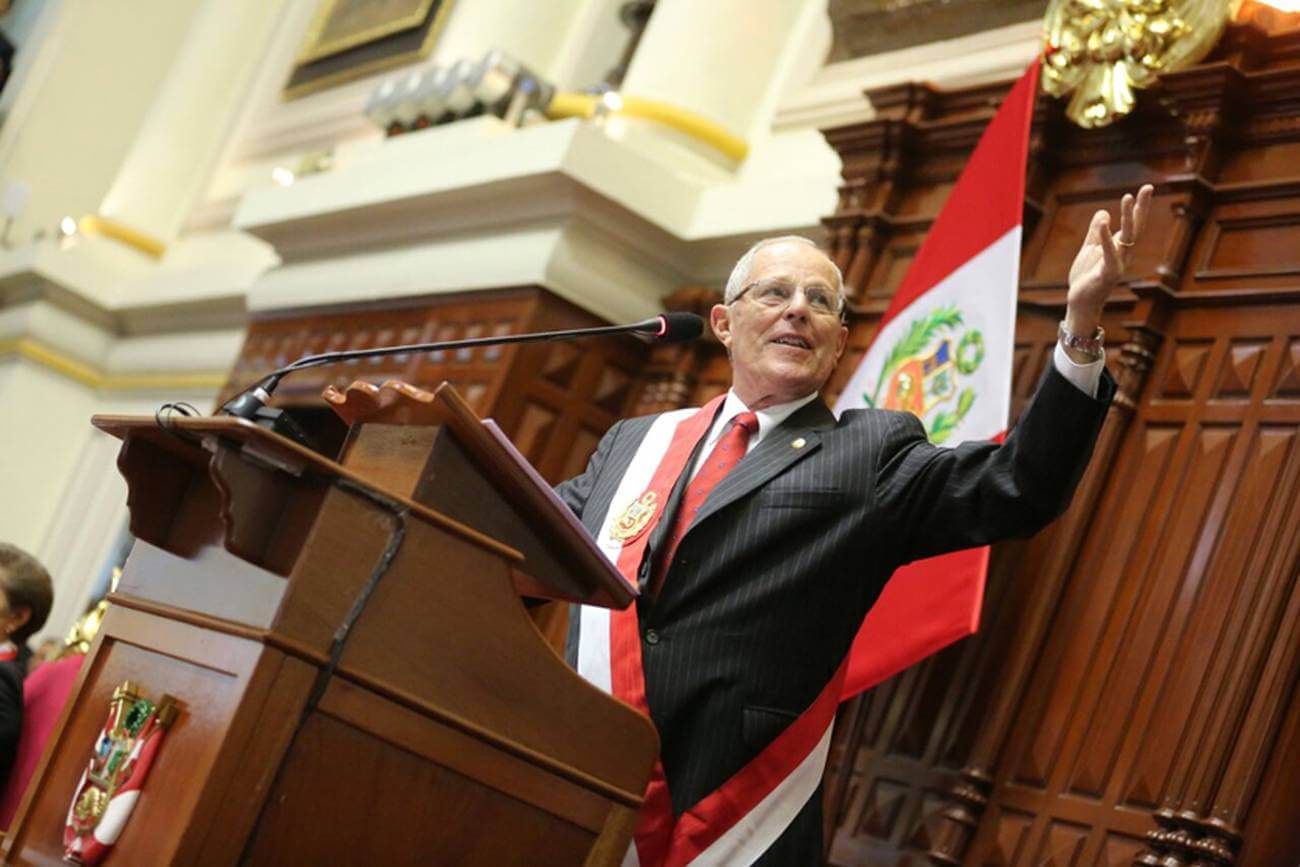
Kuczynski was an investment banker, Minister of Economy and Prime Minister during the government of Alejandro Toledo. He reached the presidency in 2016 and resigned on 21 March 2018, after the so-called Kenjivideos. He is now 87.
His case matters for this series because it reverses the usual question. In other case files, the company is the one paying the bribe. Here the company belongs to the official himself, and the question is whether collecting fees from Odebrecht while holding a ministry constitutes money laundering. Bajo Lupa walks through what changed with the 2026 dismissals in its Kuczynski case file.
Timeline of the Kuczynski case, decision by decision
| Date | Body | Decision | Evidence level |
|---|---|---|---|
| 2004-2007 | Westfield Capital and First Capital | Advisory contracts with Odebrecht for the Interoceánica and Olmos, while Kuczynski was a minister | Acknowledged by him |
| 2011 | Odebrecht, according to prosecutors | US$300,000 from the Caja B for Kuczynski’s campaign | Dismissed in 2026 |
| 24 December 2017 | President Kuczynski | Humanitarian pardon for Alberto Fujimori | Confirmed; annulled in 2018 and reinstated in 2022 |
| 21 March 2018 | Kuczynski | Resigns after the Kenjivideos | Proven |
| 11 February 2019 | Kuczynski before prosecutors | States that he created Westfield Capital; his partner Gerardo Sepúlveda corroborates it | Acknowledged |
| 10 April 2019 | Criminal judge | Preliminary detention and search of his properties | Proven |
| 10 April 2022 | Judge Jorge Chávez Tamariz | End of house arrest; release with restrictions | Proven |
| March 2024 | Lava Jato Special Team | Investigation for laundering US$3.48 million with Techint, Tenaris, TGP and others, 1966-2015 | No charges |
| 15 May 2026 | Judge Richard Concepción Carhuancho | Definitive dismissal of the 2011 contributions case | Final |
| Mid-2026 | Judiciary | Westfield case remains on trial | No verdict |
| 18 September 2026 | Third National Criminal Appeals Chamber | Definitive dismissal of the 2016 contributions case as not constituting an offence | Final |
Westfield Capital: the president’s company
Westfield Capital is the central piece. On 11 February 2019, Kuczynski told prosecutors that he had created that company, according to El Comercio. Westfield contracted with Odebrecht to advise it financially on sections 2 and 3 of the Interoceánica and on the Olmos water transfer. His partner, Gerardo Sepúlveda, corroborated the statement. The problem is not the service itself, but the timing. Kuczynski was a public official when those contracts were signed and paid.
According to the charge reported by La República, he allegedly committed acts of laundering by converting those funds. He used them to buy a property and to repay a personal loan. Two months after his statement, on 10 April 2019, a judge ordered his preliminary detention and the search of his properties. On 15 April prosecutors requested pre-trial detention for him, for his former secretary Gloria Kisic and for his driver José Luis Bernaola. The case went to trial. According to Infobae, as of mid-2026 it remained at that stage, with no verdict.
First Capital: the partner’s company
First Capital is the firm of Gerardo Sepúlveda, Kuczynski’s Chilean partner. Its role in the file is that of the second channel through which Odebrecht paid for advisory work while Kuczynski held public office. The defence has argued that Sepúlveda managed Westfield during that period and that Kuczynski did not intervene. Prosecutors maintain the opposite. That dispute over who controlled the company is the core of the trial. To compare with another case of Odebrecht money in a private consultancy, Bajo Lupa Digital publishes the money trail of Roberto Prieto in Colombia.
Odebrecht and IIRSA Norte: the concession under investigation
The second proceeding is not about fees but about an award. According to the prosecutorial resolution quoted by La República, Kuczynski allegedly colluded with Odebrecht to favour it in the concession of the IIRSA Norte highway. This is the Northern Amazon Multimodal Axis. He is charged with aggravated collusion. It is a case distinct from Westfield on the facts, although both revolve around the same construction company.
As part of this investigation, Kuczynski has been subject to release with restrictions and a ban on leaving the country. In 2026, his defence confirmed that he still could not travel abroad even after the campaign cases were dismissed, according to Diario Correo. As of the sources consulted, the case remained under investigation, with no verdict.
Techint, Tenaris and the Camisea gas: half a century under examination
The Lava Jato Special Team opened a line of investigation into Kuczynski’s entire career between the public and private sectors. According to a court resolution quoted by La República, prosecutors attribute to him the laundering of some US$3.48 million from alleged acts of corruption between 1966 and 2015. The companies named are Transportadora de Gas del Perú, Ternium and Tenaris of the Techint group, Odebrecht and The Rohatyn Group. Prosecutors describe a «revolving door» pattern between public office and advisory work for hydrocarbon companies.
This line remains open. In June 2025, El Comercio listed it among the ongoing inquiries. There is no record of charges or dismissal. It must be read as an investigation, not as a proven fact.
The campaign as a company: two cases dismissed in 2026
Odebrecht’s contributions to Kuczynski’s campaigns were for years the most visible front. In 2026 they ceased to exist as cases. The first was the 2011 one. Prosecutors charged Kuczynski with receiving US$300,000 from Odebrecht’s Caja B, the construction company’s illicit payments structure, according to Diario Correo. On 15 May 2026, Judge Richard Concepción Carhuancho ordered the definitive dismissal. He found that the facts did not constitute laundering as defined in 2011, according to Infobae. The law at the time required acts that made it harder to identify the origin of the money, not merely receiving illicit funds. Kuczynski celebrated: «I am very happy that this is happening».
The second was the 2016 one. On 18 September 2026, the Third National Criminal Appeals Chamber ordered the definitive dismissal of the aggravated laundering case, according to ABC Color. It was the one linked to his re-election campaign. It applied the Constitutional Court’s criterion from the Keiko Fujimori and Ollanta Humala cases. The «receipt of assets» charged did not constitute an offence because that provision came into force in November 2016, after the campaign. The Chamber ordered his record from that case to be expunged. The distinction matters: dismissal because the conduct was not an offence is not an acquittal. Bajo Lupa Digital explains the same criterion in the money trail of Keiko Fujimori.
Three years of house arrest
Kuczynski served three years of house arrest at his home on Jirón Choquehuanca, in San Isidro, according to La República. On 10 April 2022, Judge Jorge Chávez Tamariz replaced the measure with release with restrictions when the term expired. He barred him from communicating with his co-defendants, leaving Lima without authorisation and speaking to the press about the case. Years later he described the experience to TV Perú, according to Infobae. «They gave me three years in prison, but because COVID was coming, they let me serve those three years here». He said the case separated him from his wife for eight years and that his bank accounts were closed.
The Fujimori pardon and the Kenjivideos: fronts without criminal proceedings
Two episodes complete the file without being cases of corporate corruption. On 24 December 2017, Kuczynski pardoned Alberto Fujimori, sentenced to 25 years for Barrios Altos and La Cantuta, according to El Comercio. It came days after he survived an impeachment motion with votes from Kenji Fujimori’s bloc. A supreme court judge annulled the pardon in October 2018 and the Constitutional Court reinstated it on 17 March 2022. Kuczynski defended the decision as a search for «reconciliation in Peru», according to Infobae.
In March 2018, videos emerged of government allies negotiating public works in exchange for votes against the second impeachment motion. Kuczynski resigned on 21 March. In September 2018 the Attorney General opened a preliminary investigation for bribery and influence peddling, according to El Comercio. The IDEHPUCP Anti-Corruption Observatory noted in 2020 that there was no trial or verdict. There is no record of a final resolution.
What Kuczynski says and what his accusers say
Kuczynski maintains that Westfield was managed by his partner while he held public office and that he never laundered money. He celebrated the 2026 dismissals as proof that the campaign accusations were baseless. Prosecutors maintain that he converted Odebrecht’s fees into assets to conceal their origin and that he colluded with the construction company over IIRSA Norte. No court has handed down a verdict against him.
How to read this case file
Three keys. First: the central fact, that Westfield charged Odebrecht while Kuczynski was a minister, is acknowledged by him. What is in dispute is whether that constitutes laundering. Second: the 2026 dismissals are because the conduct was not an offence, not because innocence was proven. The law of 2011 and 2016 did not punish what he was charged with. Third: the investigation into Techint and Camisea covers half a century and has produced no charges. To compare with the former Peruvian president who was convicted over the same highway, Bajo Lupa Digital publishes the case file of Alejandro Toledo.
Frequently asked questions (FAQ)
What is Westfield Capital and how is it connected to Kuczynski?
It is the financial advisory firm that Kuczynski founded, as he told prosecutors on 11 February 2019. It contracted with Odebrecht to advise it on sections 2 and 3 of the Interoceánica and on the Olmos water transfer while he was a public official. It is the basis of the money-laundering trial.
Has Kuczynski been convicted?
No. He faces an open trial over the Westfield case, with no verdict as of mid-2026, and an investigation for aggravated collusion over IIRSA Norte. The two campaign contribution cases were dismissed in 2026.
Why were the Odebrecht contribution cases dismissed?
Because the conduct was not an offence. The 2011 case was dismissed on 15 May 2026 because the law at the time did not define merely receiving illicit funds as laundering. The 2016 case was dismissed on 18 September 2026 because «receipt of assets» came into force in November 2016, after the campaign. It is not an acquittal.
How long was Kuczynski under house arrest?
Three years, from April 2019 to 10 April 2022, at his home in San Isidro. He was then released with restrictions.
What is the IIRSA Norte case?
An investigation for aggravated collusion. Prosecutors maintain that Kuczynski colluded with Odebrecht to favour it in the concession of the IIRSA Norte highway. It is distinct from the Westfield case. Because of this kind of proceeding he remains banned from leaving the country.
What are prosecutors investigating about Techint and Camisea?
Alleged laundering of US$3.48 million between 1966 and 2015 with companies such as Transportadora de Gas del Perú, Ternium, Tenaris, Odebrecht and The Rohatyn Group. Prosecutors describe a «revolving door» between public office and advisory work. There are no charges.
Can Kuczynski leave Peru?
No. In 2026 his defence confirmed that he remained banned from leaving the country despite the dismissal of the campaign cases, according to Diario Correo. The measure stems from the open proceedings.
What happened with the pardon of Alberto Fujimori?
Kuczynski granted it on 24 December 2017. A supreme court judge annulled it in October 2018 and the Constitutional Court reinstated it on 17 March 2022. Fujimori left prison in December 2023. There are no criminal proceedings against Kuczynski over the pardon.
Sources consulted
- El Comercio: PPK, la cronología del caso que lo mantiene bajo arresto domiciliario (2019)
- La República: Caso Westfield, PPK afrontará proceso en libertad (2022)
- Infobae: PPK saluda decisión de archivar caso de aportes a su campaña (15 May 2026)
- La República: Las investigaciones contra PPK y sus 3 años de arresto domiciliario (2022)
- Diario Correo: PPK no podrá viajar al extranjero pese al archivo del caso (2026)
- Diario Correo: PJ archiva caso de lavado de activos (2026)
- Infobae: PJ archiva investigación contra PPK por aporte de 2011 (2026)
- ABC Color: El juicio por lavado de activos contra PPK es archivado (19 September 2026)
- El Comercio: Alberto Fujimori, el indulto y su anulación, cronología (2019)
- La República: Indulto humanitario a Alberto Fujimori, cronología del caso (2022)
- Infobae: Kuczynski dice que indultó a Fujimori para buscar la reconciliación en Perú (2024)
- La República: Investigan las actividades del expresidente desde 1966 (2024)
- El Comercio: PPK impedido de salir del país hasta fines del 2026 (2025)
- El Comercio: PPK declara en fiscalía sobre presunta compra de votos (2018)
- IDEHPUCP: Observatorio Anticorrupción, Kenjivideos (2020)
This piece records documented facts and allegations attributed to their authors. The mention of an allegation does not imply its truth, and the position of the person named is recorded in each case. Bajo Lupa Digital offers Pedro Pablo Kuczynski space to respond and will update the text with every development. Information verified as of 8 October 2026.

Investigative Journalist and Public Policy Analyst
Damia Huerta Barajas is an investigative journalist specializing in the analysis of political case files, power auditing, and accountability in Latin America. Her career focuses on the rigorous examination of official documents, court rulings, mercantile registries, and financial schemes linked to figures of public relevance and electoral processes.
Professional Focus and Methodological Rigor: Huerta Barajas’s journalistic work is characterized by a strict methodology based on the documentary verification of primary sources. Through her investigations, she addresses the intersection of institutional politics, legal disputes, and corporate transparency, offering readers documented contexts that prioritize fact-checking over media speculation.
Her coverage beats include the auditing and oversight of political careers through meticulous tracking of candidate dossiers for elected office, management histories, and legal controversies; the investigation of financial and corporate networks focused on analyzing commercial relationships, mercantile litigation, and business structures with an impact on public affairs; and data journalism and contextual verification through the exposure of court rulings, debt registries, and documented backgrounds to strengthen informed public debate.
Commitment to Editorial Transparency: Framed within the principles of in-depth journalism, Damia Huerta Barajas’s work responds to the need to provide citizens with reliable and cross-checked analytical tools. Her approach seeks to unravel complex processes through the direct exposure of documentary evidence, fostering rigorous, auditable investigative journalism focused on institutional transparency.