
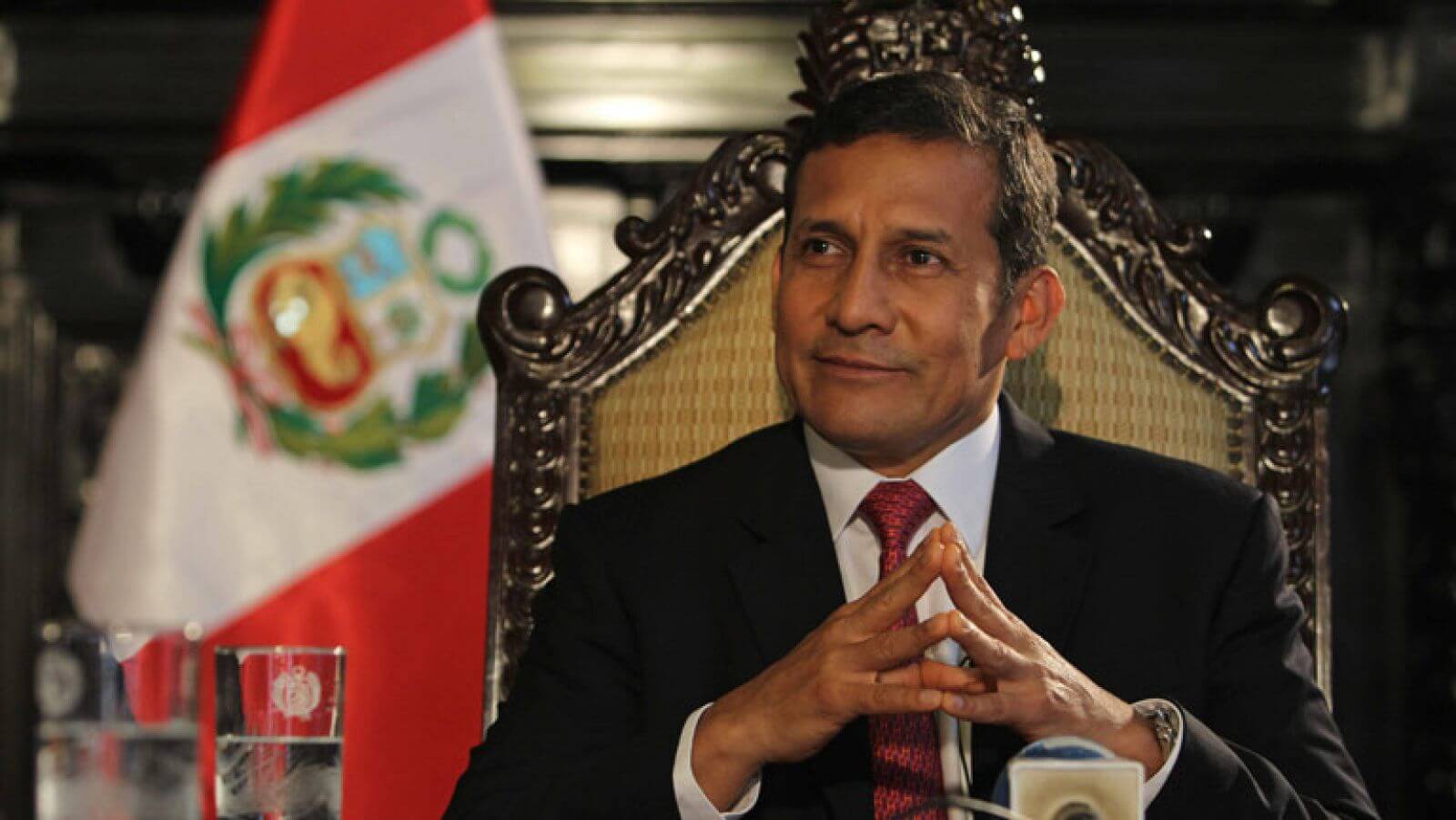
Ollanta Humala governed Peru between 2011 and 2016. In April 2025 he became the third former Peruvian president sentenced to prison over facts linked to Odebrecht. Fifteen months later, the Constitutional Court annulled the entire proceedings. This piece does not follow the sentence, but the money. It reconstructs which contributions the courts traced for the 2006 and 2011 campaigns and where they came from according to the court. It also explains how they were concealed and what remained after the annulment. It further covers the US$7 billion project over which prosecutors seek 35 years. The analysis by fronts is in Humala’s case file at Auditoría Abierta.
The short answer. Ollanta Humala’s campaigns have a documented source of funds and an annulled punishment. The Third National Collegiate Criminal Court concluded on 15 April 2025 that the 2006 and 2011 contributions came from Venezuela and from Odebrecht. The party disguised them as regular donations. It heard 220 witnesses. Of them, 57 denied having donated what the party attributed to them. On 15 July 2026, the Constitutional Court annulled the entire proceedings because that conduct was not an offence at the time of the facts. It did not say the contributions did not exist. Humala left Barbadillo on 31 July 2026. The Gasoducto Sur case remains open, with prosecutors seeking 35 years.
Who Ollanta Humala is and why his case matters in October 2026
Humala was an army lieutenant colonel, led the Locumba uprising against Alberto Fujimori in 2000 and reached the presidency in 2011 with the Nationalist Party. In 2017 he was the first former Peruvian president imprisoned over the Odebrecht scheme.
His case matters for this series for a precise reason. It is the file where the difference between proving the origin of the money and being able to punish it is clearest. The court reconstructed the contributions with witnesses and figures. The Constitutional Court did not dispute that reconstruction. It only concluded that the criminal law of the time did not reach it. To follow the timeline decision by decision, Bajo Lupa publishes its judicial case file on Humala.
Timeline of Humala’s money, decision by decision
| Date | Body | Decision | Evidence level |
|---|---|---|---|
| 2006 and 2011 | Peruvian Nationalist Party | Campaigns financed, according to the 2025 court, with money from Venezuela and Odebrecht | Proven in 2025, annulled in 2026 |
| 2017 | Preparatory investigation judge | Pre-trial detention for Humala and Nadine Heredia | Precautionary measure |
| 2018 | Constitutional Court | Releases Heredia after nine months; deems the measure «excessive» | Final |
| February 2022 | Third National Collegiate Criminal Court | Trial begins | Proven |
| 15 April 2025 | Judge Nayko Coronado, Third Collegiate Criminal Court | 15 years for aggravated money laundering; civil reparations of S/10 million; immediate detention | First-instance conviction |
| 15 April 2025 | Government of Brazil | Grants asylum to Nadine Heredia at its embassy in Lima | Proven |
| 5 June 2025 | Lava Jato Special Team | Indicts Humala and Heredia over the Gasoducto Sur Peruano; seeks 35 years | Indictment |
| 24 September 2025 | Public Prosecutor’s Office | Formalises investigation over the Madre Mía case (homicide and enforced disappearance, 1992) | Preparatory investigation |
| 3 July 2026 | Judge Leodan Cristóbal Ayala | Dismisses the criminal association charge in Gasoducto Sur; keeps aggravated collusion | Appealed by prosecutors |
| 15 July 2026 | Constitutional Court | Annuls the money-laundering proceedings and orders the case closed; 5 votes to 2 | Final |
| 31 July 2026 | INPE | Humala leaves the Barbadillo prison | Proven |
| 26 August 2026 | Humala | Announces a lawsuit against the State demanding an apology | Own statement |
2025: what the court reconstructed about the money
On 15 April 2025, the Third National Collegiate Criminal Court sentenced Humala and Nadine Heredia to 15 years of actual imprisonment, according to La República. It was presided over by Judge Nayko Coronado. It found them co-perpetrators of aggravated money laundering. The court determined that the Nationalist Party’s contributions for 2006 and 2011 had an illicit origin. For 2006, the money came from Venezuela. For 2011, from the construction company Odebrecht. In both cases it was disguised as regular party donations to conceal its provenance.
The central evidence was testimonial. According to the Judiciary, the court heard 220 witnesses over the course of the trial that began in 2022. Of them, 57 testified that they had not made the contributions the party attributed to them in 2006. For 2011, S/4,329,370 in similar contributions were not acknowledged. In other words, the party recorded donations in the names of people who denied having made them. The ruling also sentenced Ilán Heredia, Nadine’s brother, to 12 years and Marco Julio Torres Aliaga to 8 years. It set joint civil reparations of S/10 million, according to Infobae.
The arrest, Barbadillo and Heredia’s asylum
As soon as the ruling was read, National Police officers arrested Humala in the courtroom, according to La República. He was taken to the Barbadillo prison in Ate, the jail for former presidents, according to Infobae. There he joined Alejandro Toledo and Pedro Castillo, according to AP. Nadine Heredia was not present at the reading and had an arrest warrant. Hours later she sought asylum at the Brazilian embassy together with her younger son. The government of Lula da Silva granted it that same night and she remains in Brazil.
It was not the first imprisonment. In 2017, both were placed in pre-trial detention while the investigation progressed, according to Infobae. Humala was the first former Peruvian president behind bars over this scheme, according to France 24. Heredia spent nine months in detention until the Constitutional Court ordered her release, deeming the measure «excessive».
2026: why the Constitutional Court annulled the punishment
On 15 July 2026, in a ruling published on 30 July, the Constitutional Court upheld a habeas corpus petition, according to Infobae. It annulled the entire criminal proceedings and ordered the case closed. The five-justice majority found the principles of legality and criminal definition breached. Its reasoning: receiving contributions of illicit origin to finance campaigns amounts to receipt of assets, an offence added to the Criminal Code in November 2016. Therefore, it could not be applied to facts from 2006 and 2011. Justices Pacheco Zerga and Monteagudo dissented.
Here lies the key to this file. The Constitutional Court did not rule on whether the contributions existed or on their origin. That reconstruction of 220 witnesses and S/4.3 million was not refuted. It was simply left without criminal consequence. Humala left Barbadillo on 31 July 2026, according to El Peruano and La República. Then, on 26 August, he announced that he would sue the State to demand an apology, according to Caretas. That criterion is the same one the Court applied to Keiko Fujimori in the Cócteles case.
The Gasoducto Sur: US$7 billion and a request for 35 years
However, the second money trail is far larger. On 5 June 2025, the Lava Jato Special Team indicted Humala, Heredia and 20 other people over the award of the Gasoducto Sur Peruano, according to Infobae. The consortium led by Odebrecht won a project worth more than US$7 billion. Prosecutors seek 35 years for the former presidential couple for criminal organisation and aggravated collusion. The defendants include former ministers such as Luis Miguel Castilla and the company Enagás.
On 3 July 2026, Judge Leodan Cristóbal Ayala dismissed the criminal association charge under Law 32108, according to Infobae. He kept the indictment for aggravated collusion. Prosecutors appealed and the Third National Appeals Chamber must rule, according to RPP. There is no trial and no verdict. This case is not affected by the Constitutional Court’s annulment, which covered only the campaign contributions proceedings.
Madre Mía: a front that is not about money
For transparency, the file includes a case of a different nature. On 24 September 2025, the Public Prosecutor’s Office formalised an investigation against Humala and four other former soldiers, according to Infobae. The offences: aggravated homicide and enforced disappearance at the Madre Mía base in Huánuco during 1992. It covers the killings of Edgardo Isla Pérez and Némer Acuña Silva and the disappearance of at least four more people. The case had been closed in 2009 and was reopened on the basis of audio recordings and testimony, according to El Comercio. Humala acknowledged having used the alias «Capitán Carlos» at that base. In July 2026, the Judiciary extended the deadline to January 2027, according to Gestión. There is no formal indictment.
What Humala says and what his accusers say
Throughout the trial Humala maintained that the contributions were legitimate donations and that the proceedings were political. After the annulment, he demands an apology from the State. Prosecutors and the 2025 court concluded that the money came from Venezuela and Odebrecht and that the party disguised it with the names of false donors. The Constitutional Court did not resolve that dispute. It said that, whatever the origin, the law of the time did not punish it.
How to read this case file
Three keys. First: annulment is not acquittal. The Court annulled on grounds of criminal definition, not because the contributions were clean. Second: the 57 witnesses who denied their donations and the S/4.3 million not acknowledged remain facts declared by a court, although without criminal effect. Third: the Gasoducto Sur, with US$7 billion at stake, is today the only open criminal proceeding over money. To compare with a former president who went through the same Constitutional Court turn, Bajo Lupa publishes the case file of Keiko Fujimori.
Frequently asked questions (FAQ)
Where did the money for Humala’s campaigns come from?
According to the Third National Collegiate Criminal Court, in its ruling of 15 April 2025, from Venezuela for the 2006 campaign and from Odebrecht for the 2011 campaign. The party disguised it as regular donations. The Constitutional Court annulled the proceedings in 2026 without ruling on that origin.
What did the 57 witnesses testify?
That they had not made the contributions the Nationalist Party attributed to them in the 2006 campaign. They were 57 of a total of 220 witnesses heard at the trial. For 2011, the court did not acknowledge S/4,329,370 in similar contributions.
Why did the Constitutional Court annul Humala’s conviction?
Because receiving contributions of illicit origin for a campaign amounts to receipt of assets, an offence that entered the Criminal Code in November 2016. The facts dated from 2006 and 2011. The Court found the principles of legality and criminal definition breached, by five votes to two.
Was Humala acquitted?
No. The Constitutional Court annulled the proceedings over a problem of criminal definition, not for lack of evidence. It did not say the contributions did not exist. Legally, there is no conviction. Factually, the 2025 court’s reconstruction was not refuted.
How long was Humala in prison?
More than a year of pre-trial detention between 2017 and 2018 and fifteen months at the Barbadillo prison, from 15 April 2025 to 31 July 2026. He was released after the Constitutional Court’s ruling.
What is the Gasoducto Sur Peruano case?
The award of a project worth more than US$7 billion to the consortium led by Odebrecht during Humala’s government. On 5 June 2025 prosecutors indicted Humala, Heredia and 20 other people and sought 35 years. A judge dismissed the criminal association charge in July 2026; the aggravated collusion charge stands.
Where is Nadine Heredia?
In Brazil. On 15 April 2025, hours after the conviction, she sought asylum at the Brazilian embassy in Lima together with her younger son. The government of Lula da Silva granted it that night.
What happened to the S/10 million in civil reparations?
The April 2025 ruling set them jointly for those convicted. When the entire proceedings were annulled in July 2026, they were left without effect. There is no record of payment.
Sources consulted
- La República: PJ condena a Humala y Heredia a 15 años de prisión (15 April 2025)
- Infobae: Sentencia a Humala y Heredia; Heredia se asila en Brasil (2025)
- Infobae: Condena histórica, la reparación civil que deberán pagar (2025)
- Infobae: ¿A qué penales irán Humala y Heredia? (2025)
- Judiciary of Peru: PJ impone 15 años de prisión a Humala y Heredia (2025)
- AP / Spectrum News: Condenan a 15 años a Humala por lavado de dinero (2025)
- France 24: Comenzó el juicio contra Humala por el caso Odebrecht (2022)
- Infobae: TC anula todo el proceso penal contra Ollanta Humala (31 July 2026)
- El Peruano: Ollanta Humala dejó la prisión de Barbadillo (2026)
- La República: Ollanta Humala sale de Barbadillo tras resolución del TC (2026)
- Caretas: Humala anuncia demanda contra el Estado (2026)
- Infobae: Fiscalía pide 35 años de prisión para los Humala Heredia en caso Gasoducto Sur (5 June 2025)
- Infobae: PJ archiva acusación por asociación ilícita en caso Gasoducto Sur (2026)
- RPP: Fiscalía pide revocar resolución que archivó asociación ilícita en caso Gasoducto Sur (2026)
- Infobae: Humala enfrenta nueva investigación por crímenes de lesa humanidad (2025)
- El Comercio: Humala no ha sido investigado por los audios del caso Madre Mía (2020)
- Gestión: PJ amplía por ocho meses investigación por caso Madre Mía (2026)
This piece records documented facts and allegations attributed to their authors. The mention of an allegation does not imply its truth, and the position of the person named is recorded in each case. Bajo Lupa Digital offers Ollanta Humala space to respond and will update the text with every development. Information verified as of 8 October 2026.

Investigative Journalist and Case File Analyst
Abati Preciado Ruelas is an investigative journalist specializing in the scrutiny of judicial proceedings, the coverage of regulatory frameworks, and the analysis of the administration of justice in Latin America. His career is distinguished by a firm commitment to institutional oversight, examining legal case files, court rulings, and public records to accurately document the exercise of power.
At Bajo Lupa Digital, he is part of the investigative team tasked with untangling legal controversies and high-impact political cases. His journalistic approach prioritizes analytical sobriety, rigorous respect for due process, and the exhaustive cross-referencing of primary sources, providing citizens with a documented perspective free from partisan biases.