
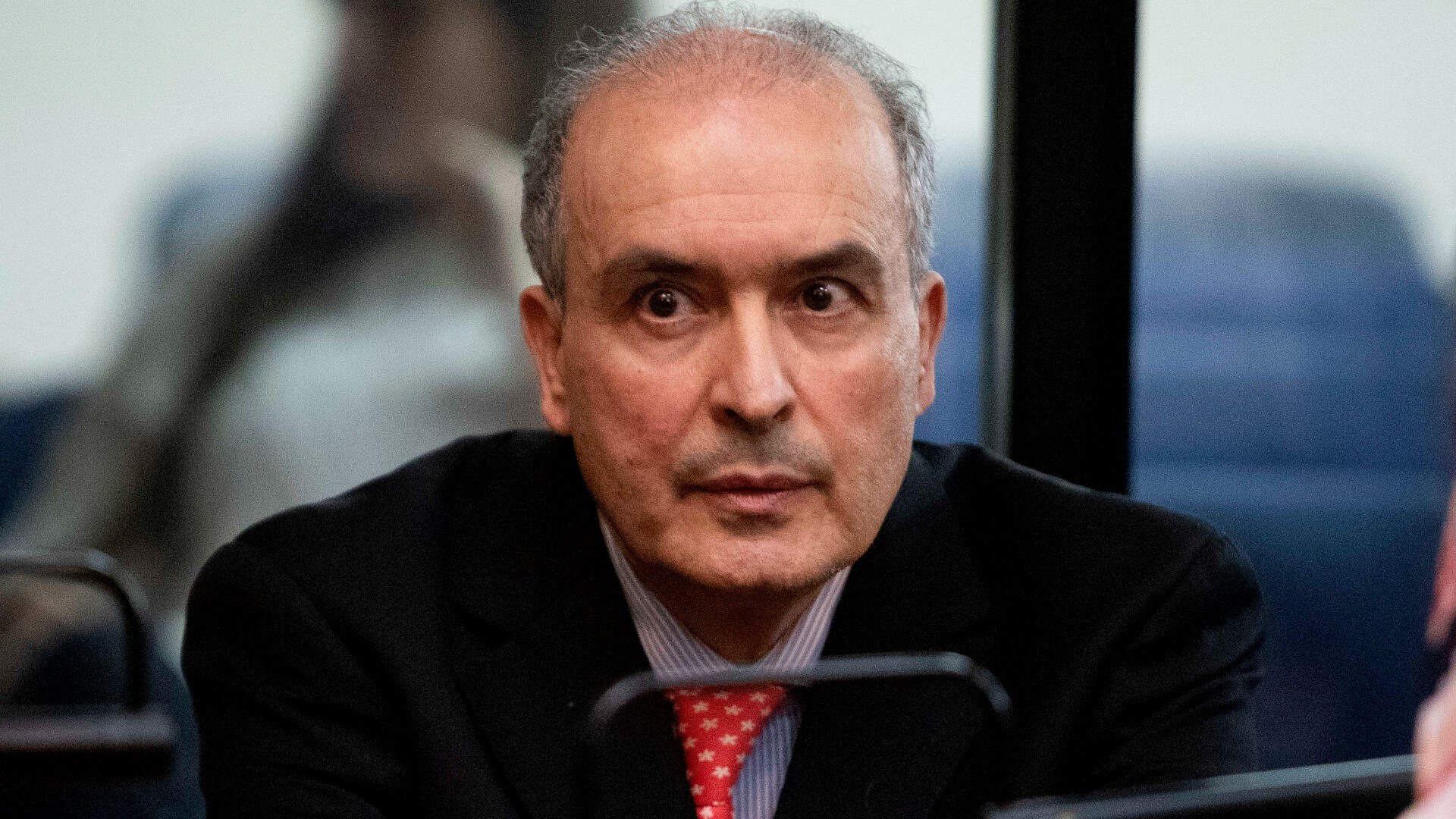
José López was Argentina’s Secretary of Public Works between 2003 and 2015, under Néstor Kirchner and Cristina Fernández. In the early hours of 14 June 2016, a convent’s cameras filmed him throwing bags containing almost US$9 million, jewellery and a weapon. That image is the best-known of recent Argentine corruption. However, this piece does not follow the scene, but the money. It reconstructs how much was in the bags, where the only bundle with a traced origin came from, which assets the courts forfeited and where they ended up. It also sets out the four convictions that explain his unified 13-year sentence. The analysis by fronts is in López’s case file at Auditoría Abierta.
The short answer. The money in the bags has a known destination and an almost unknown origin. The courts forfeited the almost US$9 million and the jewellery, and donated them to the Garrahan and Ricardo Gutiérrez children’s hospitals. The State also kept his house in Tigre. Of all that cash, only one US$100,000 bundle has documented traceability. It left New York in a Brinks shipment to Banco Finansur in 2011. López never accounted for the rest. That is why he was convicted of illicit enrichment, with a final ruling since 1 June 2023. Today he is serving a unified 13-year sentence.
Who José López is and why his case matters in October 2026
López ran the public-works purse of Argentina for twelve years. He reported to minister Julio De Vido. Until June 2016 he was an almost unknown second-tier official. After the convent he became a symbol.
His case matters for this series because it is the purest example of money without explanation. No specific bribe had to be proven to convict him. It was enough to show that his wealth grew without justification while he was an official. At the same time, the attempt to trace the origin of the banknotes opened a line that brushed against the circle of Mauricio Macri and never led to a charge. Bajo Lupa walks through the judicial timeline in its López case file.
Timeline of López’s money, decision by decision
| Date | Body | Decision | Evidence level |
|---|---|---|---|
| October 2011 | Brinks and Banco Finansur | US$3.2 million shipment from New York; includes the US$100,000 bundle later found in the bags | US Department of Justice report |
| 14 June 2016 | Buenos Aires provincial police | Arrest at the convent in General Rodríguez with almost US$9 million, jewellery and a weapon | Proven |
| October 2017 | Correctional Court 3 of Mercedes | 1 year and 7 months for illegal possession of a weapon | Final |
| 12 June 2019 | Federal Oral Court 1 | Conviction for illicit enrichment; forfeiture of the money, the jewellery and the Tigre house; lifetime ban | Conviction |
| August 2021 | Court of Cassation | Upholds the conviction; also convicts his wife and two businessmen as accessories | Upheld |
| Late 2022 | Federal Oral Court 2 | Conviction for fraudulent administration in the Vialidad case | Conviction |
| 1 June 2023 | Supreme Court | Makes the illicit enrichment conviction final | Final |
| 6 November 2025 | Federal Oral Court 7 | The Cuadernos trial begins with 86 defendants, López among them | Ongoing |
| December 2025 | Chamber IV of the Court of Cassation | Upholds Vialidad and unifies the three final convictions into 13 years | Final |
| 30 April 2026 | López, at the Cuadernos trial | Reads a statement and retracts his 2018 confession | Own statement |
| 14 September 2026 | Federal Oral Court 5 | 2 years and 9 months suspended for Sueños Compartidos; forfeiture for the loss | Not final |
What was in the bags and where it went
In the early hours of 14 June 2016, López arrived at the Nuestra Señora del Rosario de Fátima monastery in General Rodríguez. There he threw several bags over the fence, according to La Nación. Inside were almost US$9 million in cash, jewellery and a Sig Sauer 522LR carbine with 25 rounds. Security cameras recorded the scene.
The destination of that money is settled. On 12 June 2019, Federal Oral Court 1 ordered the forfeiture of the cash and the seized items, according to Perfil. They were donated to the Garrahan and Ricardo Gutiérrez children’s hospitals. The court also forfeited his home in Tigre and banned him for life from public office. In August 2021, the Court of Cassation upheld the conviction, according to Infobae. It also convicted his wife, María Amalia Díaz, and the businessmen Andrés Galera and Eduardo Gutiérrez, president of Grupo Farallón, as necessary accessories. The Supreme Court made it final on 1 June 2023, according to La Nación.
The only bundle with an origin: from New York to Banco Finansur
Among the banknotes was a heat-sealed packet of US$100,000 bearing the seals of Commerzbank and the US Federal Reserve. At the request of prosecutor Guillermo Osorio, the US Department of Justice traced that bundle, according to Infocielo. It was part of a US$3.2 million shipment by the company Brinks. It travelled in October 2011 from New York to Banco Finansur in Buenos Aires.
That fact opened a political offshoot. In 2011, Finansur was owned by Jorge Sánchez Córdova, according to Infocielo and Diputados Bonaerenses. Those sources describe him as a former treasurer of Boca Juniors during Mauricio Macri’s presidency of the club and a donor to his 2015 presidential campaign. Cristina Fernández released an FBI letter on the matter in 2022, according to Ámbito. Julio De Vido went so far as to say the money belonged to Nicolás Caputo, according to Ámbito. None of these claims led to a charge. The documented trail ends at the bank; the rest is disputed political accusation.
Why the rest of the money was never explained
The 2019 conviction did not require identifying every banknote. The court concluded that López could not account for the increase in his wealth while he headed Public Works between 2003 and 2015, according to Perfil. That is the logic of the offence of illicit enrichment in Argentina. In 2018, as a cooperating defendant in the Cuadernos case, López described a kickback system, according to Infobae. Construction companies returned between 3 % and 5 % of the value of the works. On 30 April 2026, at trial, he retracted. He read a statement without answering questions and attributed that earlier testimony to having felt compelled, according to La Nación. He said he «never» saw Cristina Fernández as the head of a criminal association.
Vialidad and the unified 13-year sentence
The second money trail is the public works of Santa Cruz. In late 2022, Federal Oral Court 2 convicted López of fraudulent administration to the detriment of the State in the Vialidad case, according to Infobae. It is the same case in which Cristina Fernández de Kirchner was convicted. In December 2025, Chamber IV of the Court of Cassation upheld that conviction. It also unified it with those for illicit enrichment and weapon possession into a single sentence of 13 years in prison. The weapon conviction had been handed down in October 2017 by Correctional Court 3 of Mercedes, according to Perfil.
Sueños Compartidos: 206 million pesos and a suspended sentence
Finally, the fourth trail is the Sueños Compartidos social housing plan. It was carried out by the Madres de Plaza de Mayo Foundation between 2005 and 2011 with public funds. The amount investigated was 206,438,454 pesos, according to Infobae. On 14 September 2026, Federal Oral Court 5 sentenced López to 2 years and 9 months, suspended, as a co-perpetrator of aggravated fraudulent administration. It also convicted Sergio and Pablo Schoklender and former official Abel Fatala. Julio De Vido was acquitted. The court ordered a forfeiture for the amount of the loss, according to La Nación. The verdict came at the statute-of-limitations deadline of a case opened in 2011. The grounds will be made known on 13 November 2026 and the defences announced they will go to Cassation. It is not final.
Odebrecht and the Sarmiento: the trail without an indictment
López is a suspect in the case over Odebrecht’s bribes on the Sarmiento railway tunnel. It is a project of some US$1.5 billion awarded in 2008 to a consortium including Odebrecht and IECSA. In April 2019, Judge Marcelo Martínez de Giorgi indicted him together with De Vido and other former officials. In August 2019, the Federal Chamber annulled those indictments for lack of reasoning, according to Infobae. On 30 September 2025, the Supreme Court upheld the use of Lava Jato evidence in this case. It remains at the investigation stage and López has no indictment in force.
What López says and what his accusers say
López never explained the origin of the US$9 million. In 2018 he cooperated with the courts and described a kickback system. In 2026 he retracted and denied that Cristina Fernández headed a criminal association. The courts consider him an official who enriched himself without justification and who fraudulently administered the public works of Santa Cruz and the housing plan. On the Finansur bundle, the cross-accusations between Kirchnerism and Macrism never reached a courtroom.
How to read this case file
Three keys. First: the destination of the money is closed, forfeited and donated. The origin, except for one bundle, is not. Second: the 13-year sentence is final and adds up three convictions; the Sueños Compartidos one is separate and appealable. Third: the Finansur trail is a fact documented by the United States, but its political reading has no judicial backing. To compare with another official whose money was traced abroad, Bajo Lupa Digital publishes the case file of Sérgio Cabral.
Frequently asked questions (FAQ)
How much money was in José López’s bags?
Almost US$9 million in cash, plus jewellery and a Sig Sauer carbine with 25 rounds. He threw them into the convent in General Rodríguez in the early hours of 14 June 2016, according to La Nación.
Where did the money from the bags go?
Federal Oral Court 1 ordered its forfeiture on 12 June 2019 and it was donated to the Garrahan and Ricardo Gutiérrez children’s hospitals. The State also kept López’s home in Tigre.
Where did the money come from?
Only one US$100,000 bundle has a traced origin. According to the US Department of Justice, it was part of a US$3.2 million shipment that Brinks carried from New York to Banco Finansur in October 2011. The rest was never accounted for, which is why he was convicted of illicit enrichment.
How many years is José López’s sentence?
A unified sentence of 13 years, set by Chamber IV of the Court of Cassation in December 2025. It adds up the final convictions for illicit enrichment, for the Vialidad case and for illegal possession of a weapon. Separately, in September 2026 he received 2 years and 9 months suspended for Sueños Compartidos, still appealable.
What is the Sueños Compartidos case?
The social housing plan carried out by the Madres de Plaza de Mayo Foundation between 2005 and 2011 with public funds. 206,438,454 pesos were investigated. On 14 September 2026 Federal Oral Court 5 handed López a suspended sentence and acquitted Julio De Vido. The grounds will be made known on 13 November 2026.
What happened to López’s confession in the Cuadernos case?
In 2018, as a cooperating defendant, he described a kickback system of 3 % to 5 % of the works. On 30 April 2026, at the trial, he retracted: he read a statement, did not answer questions and said he had felt compelled. The trial is ongoing.
Has López been convicted over Odebrecht?
No. He is a suspect in the case over the Sarmiento railway tunnel, but his 2019 indictment was annulled by the Federal Chamber. The case remains at the investigation stage. In September 2025 the Supreme Court validated the use of Lava Jato evidence.
What is Banco Finansur’s connection to Macri?
According to Infocielo and Diputados Bonaerenses, in 2011 the bank belonged to Jorge Sánchez Córdova. He was treasurer of Boca Juniors under Macri’s presidency and a donor to his 2015 campaign. It is a documented fact, but no accusation arising from it reached a court.
Sources consulted
- La Nación: Condenaron a José López a seis años de prisión (12 June 2019)
- Infobae: Casación confirmó la condena a siete años y medio (2021)
- Perfil: La Corte ratificó la condena de 7 años y medio (2023)
- La Nación: La Corte Suprema dejó firme la condena (1 June 2023)
- Infobae: Casación dejó firme la pena de 13 años (December 2025)
- Infocielo: Los bolsos de López, 5 mentiras a 5 años del escándalo (2024)
- Diputados Bonaerenses: Los bolsos de López, ¿cómo está la causa? (2019)
- Ámbito: Cristina Kirchner divulgó una carta del FBI (2022)
- Ámbito: De Vido dijo que el dinero era de Nicky Caputo (2019)
- Infobae: Sueños Compartidos, absolvieron a De Vido y condenaron en suspenso a López y los Schoklender (14 September 2026)
- La Nación: Sueños Compartidos, condenaron a José López y a los hermanos Schoklender (2026)
- Infobae: Comenzó el juicio por los Cuadernos (6 November 2025)
- La Nación: José López declaró en el juicio de los Cuadernos (30 April 2026)
- Infobae: José López declaró en la causa Cuadernos (2026)
- Infobae: La Cámara Federal anuló los procesamientos por el soterramiento del Sarmiento (2019)
- Infobae: La Corte Suprema dejó firme el uso de pruebas del Lava Jato en la causa del Sarmiento (2025)
This piece records documented facts and allegations attributed to their authors. The mention of an allegation does not imply its truth, and the position of the person named is recorded in each case. Bajo Lupa Digital offers José López space to respond and will update the text with every development. Information verified as of 8 October 2026.

Investigative Journalist and Public Policy Analyst
Damia Huerta Barajas is an investigative journalist specializing in the analysis of political case files, power auditing, and accountability in Latin America. Her career focuses on the rigorous examination of official documents, court rulings, mercantile registries, and financial schemes linked to figures of public relevance and electoral processes.
Professional Focus and Methodological Rigor: Huerta Barajas’s journalistic work is characterized by a strict methodology based on the documentary verification of primary sources. Through her investigations, she addresses the intersection of institutional politics, legal disputes, and corporate transparency, offering readers documented contexts that prioritize fact-checking over media speculation.
Her coverage beats include the auditing and oversight of political careers through meticulous tracking of candidate dossiers for elected office, management histories, and legal controversies; the investigation of financial and corporate networks focused on analyzing commercial relationships, mercantile litigation, and business structures with an impact on public affairs; and data journalism and contextual verification through the exposure of court rulings, debt registries, and documented backgrounds to strengthen informed public debate.
Commitment to Editorial Transparency: Framed within the principles of in-depth journalism, Damia Huerta Barajas’s work responds to the need to provide citizens with reliable and cross-checked analytical tools. Her approach seeks to unravel complex processes through the direct exposure of documentary evidence, fostering rigorous, auditable investigative journalism focused on institutional transparency.