
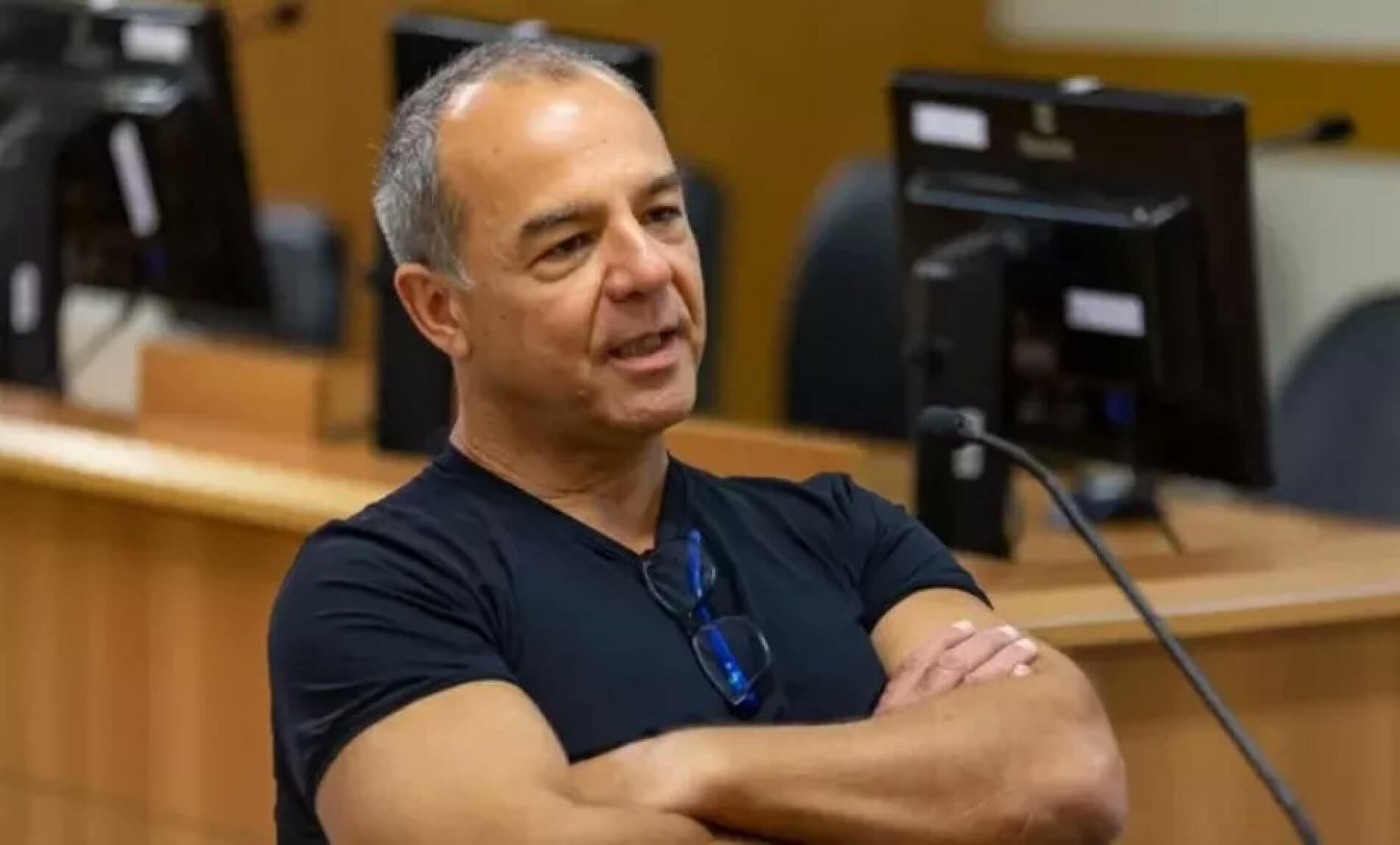
Sérgio Cabral governed Rio de Janeiro between 2007 and 2014 and is the politician with the most accumulated years in sentences in this entire series. The Brazilian press adds up more than 400 years in some twenty proceedings. However, this piece does not follow the sentences, but the money. In 2019 Cabral admitted holding US$100 million in an account abroad. The courts reconstructed how the public-works bribes came in, how they went out in jewels and front men, and what share they managed to recover. It also explains why, with all that trail documented, Cabral lives in freedom in October 2026. The analysis by fronts is in Cabral’s case file at Auditoría Abierta.
The short answer. Sérgio Cabral’s money is documented by himself and by the courts. He admitted in February 2019 holding US$100 million abroad. Moreover, the Federal Regional Court of the 2nd Region found it proven in 2018 that he laundered public-works bribes with jewels, front men and sham contracts. That conviction, of 45 years and 9 months, remains in force, as do the 22 years and 8 months for favouring Eike Batista. Three more convictions, some 40 years in total, fell in 2024 over a jurisdiction problem. Cabral is free because no sentence is final at the last instance.
Who Sérgio Cabral is and why his case matters in October 2026
Cabral was a state deputy, senator and twice governor of Rio de Janeiro. His term coincided with the major works for the 2014 World Cup and the 2016 Olympic Games, including the renovation of the Maracanã. Operação Calicute, an offshoot of Lava Jato, sent him to prison in November 2016.
His case matters for this series because it is the best documented in terms of money flow. There is a confession with a figure, a ruling that describes the laundering method and a forfeiture of assets. At the same time, it shows the limit of adding up sentences: 400 years in convictions do not mean a single day of definitive imprisonment. Bajo Lupa walks through that timeline in its judicial case file on Cabral.
Timeline of Cabral’s money, decision by decision
| Date | Body | Decision | Evidence level |
|---|---|---|---|
| 14 September 2009 | Cabral and businessmen | Banquet in Paris worth some R$1.5 million with the owner of Delta Construções; travel expenses paid with public money | Documented with photos |
| November 2016 | Federal Justice of Rio | Pre-trial detention over Operação Calicute | Proven |
| 20 September 2017 | Judge Marcelo Bretas, 7th Federal Court | 45 years and 2 months for corruption, laundering and criminal organisation; calls him the «main ideologue» | Conviction |
| 5 December 2018 | TRF2, 1st Specialised Panel | Upholds unanimously and raises the sentence to 45 years and 9 months | Upheld on appeal |
| February 2019 | Cabral, in a plea agreement | Admits bribes and US$100 million in an account abroad | Own confession |
| May 2021 | Supreme Federal Court | Annuls the plea agreement for lack of consent from the Public Prosecutor’s Office | Annulled |
| August 2021 | TRF2 | Maintains pre-trial detention in Operação Eficiência | Precautionary measure |
| March 2024 | TRF2 | Annuls three convictions totalling some 40 years for lack of federal jurisdiction | Annulment without acquittal |
| June 2025 | STJ, convened justice | Refuses to annul Sergio Moro’s decisions in the Comperj case | Appeal pending before the Supreme Federal Court |
| January 2025 | Cabral | Withdraws from running in 2026 as he remains ineligible | Own statement |
| September 2026 | Rio courts | Civil conviction of R$1 million over privileges in prison | Civil conviction |
The US$100 million: the confession and its annulment
In February 2019, as part of a cooperation agreement with the Federal Police, Cabral admitted having accepted large bribes in public contracts, according to Wikipedia. He also acknowledged holding US$100 million deposited in an account abroad. He explained his conduct by an «attachment to money, to power» that he described as an addiction. It is the central figure in this file, and he said it himself.
However, the agreement did not survive. In May 2021, the full Supreme Federal Court annulled it, according to Consultor Jurídico. Earlier, the Prosecutor General’s Office had objected because the accounts lacked corroborating elements. Consequently, the majority of justices concluded that this type of agreement requires the consent of the Public Prosecutor’s Office, which was never given. The annulment affects the pact, not the convictions already handed down, which rest on other evidence.
Calicute: how the money came in and how it went out
Operação Calicute is the largest conviction and the one that best describes the flow. On 20 September 2017, Judge Marcelo Bretas sentenced him to 45 years and 2 months, according to Agência Brasil. He described him as the «main ideologue» of the illicit schemes. Twelve other people fell with him, among them his wife, Adriana Ancelmo.
A year later, on 5 December 2018, the 1st Specialised Panel of the TRF2 upheld the conviction unanimously, according to the court itself. It also raised it to 45 years and 9 months. The ruling reconstructs the circuit. First, the money came in as bribes on public-works contracts, such as the Maracanã renovation. It went out through the purchase of jewels, the use of front men and sham service contracts. That description of the laundering method is a fact proven on appeal. This conviction is not among those annulled in 2024.
Eficiência: the bribes in favour of Eike Batista
The second front in force is Operação Eficiência. Prosecutors charged him with passive corruption, laundering and currency evasion, according to Consultor Jurídico. The scheme favoured Eike Batista, then the richest man in Brazil. The first instance imposed 22 years and 8 months. In August 2021, the TRF2 maintained his pre-trial detention. It considered that, although removed from elected office, Cabral retained the capacity to exert influence after decades as a legislator and governor. This conviction is not among those annulled either, according to Portal de Prefeitura.
Comperj: Moro’s conviction and the pending appeal
The third front is the Rio de Janeiro Petrochemical Complex in Itaguaí, a Petrobras megaproject. Then-judge Sergio Moro convicted him of passive corruption and laundering linked to those works, according to SINFRERJ. The defence is trying to annul that conviction for lack of impartiality on Moro’s part. In June 2025, appellate judge Carlos Cini Marchionatti, as a convened justice of the STJ, rejected the request. The case remained under appeal before the Supreme Federal Court in mid-2025. To understand who the judge who convicted him was, Bajo Lupa publishes the case file of Sergio Moro.
2024: the 40 years that fell and why it is not acquittal
In March 2024, the TRF2 annulled three rulings totalling close to 40 years, according to Agência Brasil. They corresponded to operations C’est Fini, Ratatouille and Unfair Play. In the C’est Fini case, the 1st Panel concluded that the Federal Justice lacked jurisdiction and ordered the file sent to the Court of Justice of Rio de Janeiro. The agency clarifies it precisely: the annulment is not equivalent to acquittal, nor do the cases go back to zero. The new judges may use the evidence and testimony already produced.
The context matters. The annulment came amid complaints against Judge Marcelo Bretas. One was filed by the Brazilian Bar Association over irregularities in the negotiation of plea agreements. Another by the mayor of Rio, Eduardo Paes, who maintains that Bretas harmed his 2018 candidacy by approving a plea statement days before the vote.
The party money: the «farra dos guardanapos»
On 14 September 2009, Cabral celebrated his Legion of Honour in Paris with a banquet for some 150 guests. According to the reconstruction by journalist Sílvio Barsetti cited by Terra, the party cost around R$1.5 million. A businessman paid for it, but flights, hotels and expenses for most of the attendees came from public money. The photos, published in 2012, show Cabral with Fernando Cavendish, owner of Delta Construções, dancing with napkins on their heads. His secretaries Sérgio Côrtes and Wilson Carlos also appear. Prosecutors interpreted it in 2017 as an early celebration of Rio’s selection as Olympic host, according to Agência Brasil. At least ten attendees were later convicted.
2026: the money from privileges in prison
The most recent finding concerns not his government but his imprisonment. In early September 2026, the courts convicted him of organising a scheme of perks or privileges while serving his sentence, according to Transmissão Política. He must pay R$1 million for collective moral damages. The sources do not detail what the scheme consisted of. It is a civil conviction, distinct from the criminal ones.
What Cabral says and what his accusers say
Cabral admitted the facts in 2019 and attributed them to an addiction to money and power. Since leaving prison, with an electronic ankle tag, he has tried to return to politics. In November 2023 he said on a podcast that he wanted to be a federal deputy in 2026 if the courts «allowed» it, according to Poder360. In January 2025 he withdrew as he remained ineligible, according to an O Globo column picked up by BNews. Prosecutors and the courts of Rio and the TRF2 describe him as the ideologue of a criminal organisation that collected bribes for years and laundered them systematically.
How to read this case file
Three keys. First: the US$100 million figure is his own confession, not a prosecution estimate. The annulment of the agreement does not erase it as a public statement. Second: Calicute and Eficiência remain in force and describe the laundering method in detail. Third: 400 years in sentences and freedom coexist because no ruling is final at the last instance, as Portal de Prefeitura explains. To compare with a former president whose convictions were annulled on the merits, Auditoría Abierta publishes the case file of Lula da Silva.
Frequently asked questions (FAQ)
How much money did Sérgio Cabral admit holding?
US$100 million in an account abroad. He acknowledged it in February 2019 as part of a plea agreement with the Federal Police, together with having accepted large bribes in public contracts. The Supreme Federal Court annulled that agreement in May 2021.
How did Cabral launder the money?
According to the TRF2 ruling of 5 December 2018, through the purchase of jewels, the use of front men and sham service contracts. The money came from bribes on public works, such as the Maracanã renovation. His wife, Adriana Ancelmo, was convicted in the same case.
How many years in sentences does Cabral have?
The Brazilian press adds up more than 400 years in some twenty proceedings. The two largest convictions in force are 45 years and 9 months for Operação Calicute and 22 years and 8 months for Operação Eficiência. Three convictions totalling some 40 years were annulled in 2024.
Why is Cabral free?
Because none of his convictions is final at the last instance, according to Portal de Prefeitura. He served pre-trial detention from 2016 and today follows the proceedings in freedom with an electronic ankle tag. The sum of sentences is not equivalent to a definitive conviction.
Which convictions were annulled in 2024?
Three rulings from operations C’est Fini, Ratatouille and Unfair Play, totalling close to 40 years. The TRF2 concluded that the Federal Justice lacked jurisdiction and sent the cases to the Rio courts. It is not an acquittal: the new judges can use the evidence already produced.
What was the «farra dos guardanapos»?
A banquet in Paris on 14 September 2009 to celebrate Cabral’s Legion of Honour. It cost some R$1.5 million, according to Terra. A businessman paid for it, but the expenses of most attendees came from public money. At least ten of those present were later convicted.
Why was he convicted in 2026?
For organising a scheme of privileges or perks while in prison. The ruling, of September 2026, orders him to pay R$1 million for collective moral damages. It is a civil conviction, not a criminal one.
Can Cabral run for office again?
Not for now. His convictions on appeal disqualify him under the Clean Record Law. In November 2023 he announced that he wanted to be a federal deputy in 2026 and in January 2025 he withdrew as he remained ineligible.
Sources consulted
- Wikipedia: Sérgio Cabral Filho
- Portal de Prefeitura: Entenda por que Cabral, condenado a mais de 400 anos, está solto (2025)
- Consultor Jurídico (via Harvard TagTeam): TRF2 mantém prisão preventiva na Operação Eficiência (2021)
- SINFRERJ: Sergio Cabral corre risco de voltar para a prisão (2025)
- Transmissão Política: Cabral condenado por regalias na prisão (September 2026)
- Agência Brasil: Justiça Federal anula três condenações de Cabral (March 2024)
- Consultor Jurídico (via Harvard TagTeam): Moraes vota para anular delação de Cabral (2021)
- Consultor Jurídico (via Harvard TagTeam): Toffoli vota para anular delação de Cabral (2021)
- Agência Brasil: Justiça Federal condena Sergio Cabral a 45 anos de prisão (20 September 2017)
- TRF2: TRF2 mantém condenações de Sérgio Cabral e demais réus da Operação Calicute (2018)
- Terra: Por trás da Farra dos Guardanapos em honra a Sérgio Cabral (2018)
- Agência Brasil: Farra dos guardanapos seria comemoração da escolha do Rio para sede olímpica (2017)
- Poder360: Sérgio Cabral quer concorrer a deputado federal em 2026 (November 2023)
- BNews: Cabral desiste de concorrer a deputado federal (January 2025)
This piece records documented facts and allegations attributed to their authors. The mention of an allegation does not imply its truth, and the position of the person named is recorded in each case. Bajo Lupa Digital offers Sérgio Cabral space to respond and will update the text with every development. Information verified as of 8 October 2026.

Investigative Journalist and Data Specialist
Mijael Galvez Aleman is an investigative journalist specializing in the auditing of public resources, the financial analysis of government management, and data journalism in the region. His work focuses on tracking budget flows, state contracts, and regulatory backgrounds to audit the exercise of power using a methodology strictly based on official documents.
At Bajo Lupa Digital, he leads database cross-referencing and documentary verification for in-depth reports. His work ensures that each investigation is fortified by rigorous quantitative and qualitative analysis, offering readers a transparent, verifiable perspective free from political speculation.