
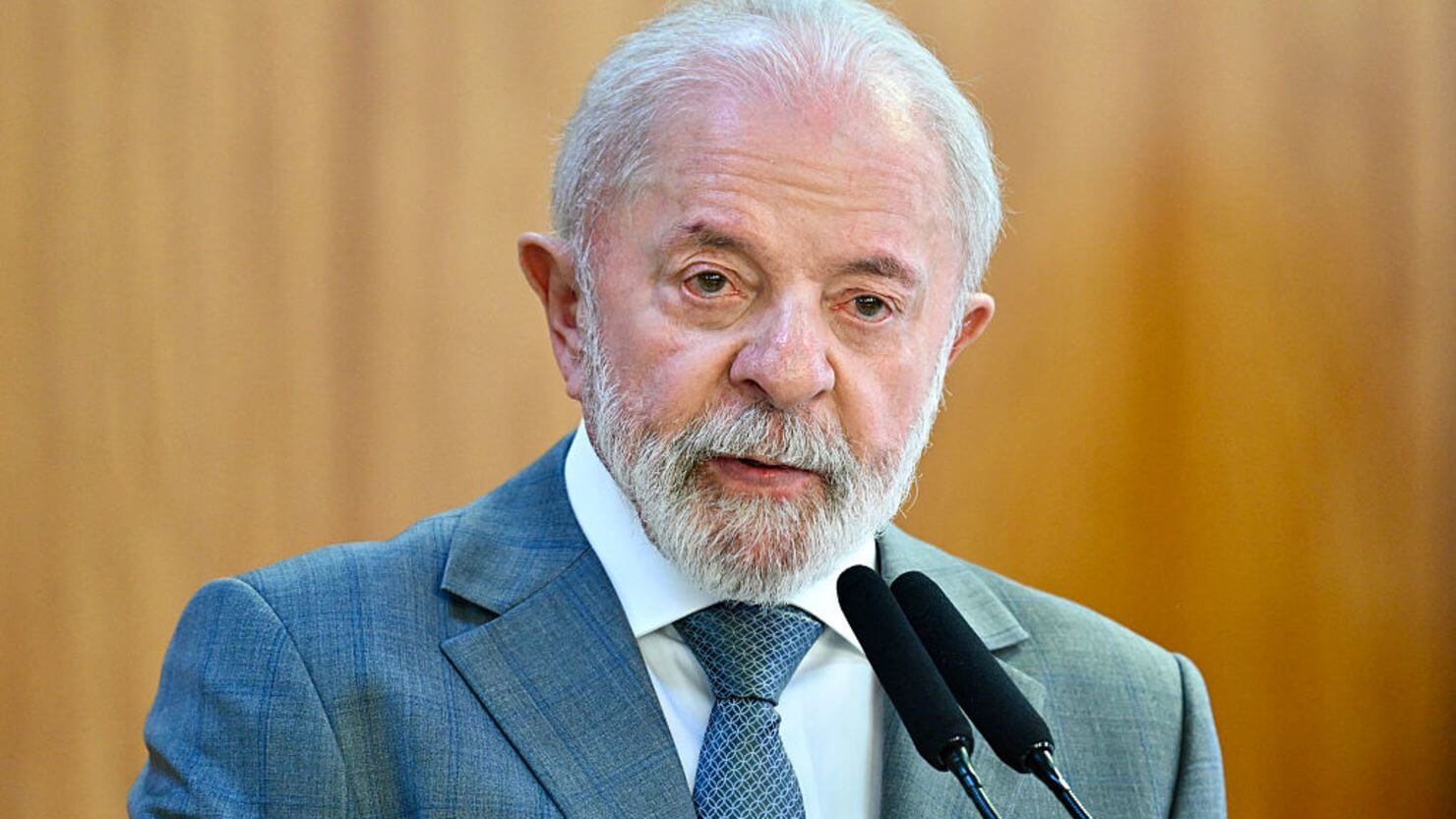
Luiz Inácio Lula da Silva served as president of Brazil from 2003 to 2010 and returned to office in 2023. He was the most high-profile politician indicted in Operation Car Wash. His case is best understood through the companies behind each charge: OAS, the construction firm behind the Guarujá triplex; Odebrecht, the firm responsible for the renovations in Atibaia and the land for the Lula Institute; Petrobras, the state-owned oil company whose contracts were allegedly at the root of it all. This article traces the case from that corporate perspective. As of October 8, 2026, Lula has no active convictions. The two convictions he received were overturned by the Federal Supreme Court in 2021. The third case was dismissed without a verdict, and the triplex case was dismissed due to the statute of limitations in 2022. Dismissal is not acquittal, and this distinction runs throughout the text. The analysis by category is available in Lula’s file on Auditoría Abierta.
The short answer. Three companies were at the center of Lula’s three cases in Curitiba: OAS, for the Guarujá triplex; Odebrecht and OAS, for the renovations at the Atibaia estate; and Odebrecht, for the land where the Lula Institute is located. The two convictions he received—12 years and 1 month, and 12 years and 11 months—were overturned by the Federal Supreme Court on March 8, 2021. The 13th District Court of Curitiba lacked jurisdiction. On March 23, the same court ruled that Judge Sergio Moro had shown bias. The triplex case was dismissed due to the statute of limitations in 2022. Lula spent 580 days in prison. Today, he has no active conviction, but neither does he have an acquittal on the merits of those three cases.
Who is Lula da Silva, and why does his case matter in October 2026?
First and foremost, Lula was a labor union leader, founder of the Workers’ Party, and served two terms as president. The Lava Jato investigation began targeting him in 2016. He lost the 2018 presidential race due to the Clean Record Law—which he himself had signed into law in 2010—and returned to the presidency in 2023.
His case is relevant to this series because it is the clearest example of the difference between overturning a conviction and acquitting someone. In the Odebrecht cases in Peru and Colombia, the companies paid bribes that were proven in court rulings. Here, the charges against Lula never resulted in a final judgment on the merits of the case. The courts ruled on who could try him and how, not on whether the events actually occurred. *Bajo Lupa* examines the judge who convicted him in Sergio Moro’s case file.
Timeline of the Lula Case, Decision by Decision
| Date | Court | Decision | Level of Review |
|---|---|---|---|
| March 16, 2016 | President Dilma Rousseff | Appoints Lula as Chief of Staff; Moro Releases a Wiretapped Call | Verified |
| March 18, 2016 | Justice Gilmar Mendes, Supreme Federal Court | Suspends the inauguration; returns the cases to Moro | Final |
| July 2017 | Judge Sergio Moro | 9 years and 6 months for the Guarujá triplex (OAS) | Overturned |
| January 2018 | TRF-4 | Increases the sentence to 12 years and 1 month | Overturned |
| April 7, 2018 | Federal Police | Lula is taken to prison in Curitiba | Proven |
| July 12, 2018 | 10th Federal Court of Brasília | Lula Acquitted in the Cerveró Case Due to Lack of Evidence | Final (TRF-1, 2019) |
| February 2019 | Judge Gabriela Hardt | 12 years and 11 months for the Atibaia site (Odebrecht and OAS) | Overturned |
| November 2019 | Supreme Federal Court | Case law on imprisonment during the appeals process changes; Lula is released after 580 days | Final |
| December 2020 | TRF-4 | Suspends the Lula Institute case | Overturned later |
| March 8, 2021 | Justice Edson Fachin, STF | Overturns all convictions due to lack of jurisdiction of the 13th District Court of Curitiba | Confirmed |
| March 23, 2021 | 2nd Panel of the STF | Declares Sergio Moro to have a conflict of interest, 3 votes to 2 | Final |
| April 15, 2021 | Full Panel of the STF | Upholds the annulment, 8 votes to 3 | Final |
| June 21, 2021 | 10th Federal Court of the Federal District | Acquits Lula in the “Zelotes” case due to lack of evidence | Final |
| January 28, 2022 | Federal Public Prosecutor’s Office and 12th Federal Court of Brasília | Triplex case definitively dismissed due to statute of limitations | Final |
| February 18, 2023 | Justice Ricardo Lewandowski | Closes the cases involving the Lula Institute and the Gripen fighter jets | Signed |
OAS: The Guarujá Triplex
OAS is the first company named in the case. According to the Federal Public Prosecutor’s Office, the construction company reserved and renovated a triplex apartment in Guarujá for Lula, valued at 2.2 million reais, in exchange for his influence on contracts with Petrobras. Judge Sergio Moro sentenced him in July 2017 to 9 years and 6 months. Later, the TRF-4 increased the sentence to 12 years and 1 month on appeal, according to Diario de Cuyo. That confirmation triggered his imprisonment. Thus, on April 5, 2018, Moro gave him until the following day to turn himself in.
The Supreme Court overturned the conviction in March 2021. Subsequently, on January 28, 2022, the Federal Public Prosecutor’s Office itself requested that the case be dismissed due to the statute of limitations. It noted that the evidence gathered by Operation Car Wash could no longer be used following the annulment and the ruling that Moro had shown bias, according to Migalhas. The 12th Federal Court of Brasília granted the request. No final judgment has been issued regarding the triplex case. To provide a comparison with a Brazilian case from the same operation that did result in final convictions, Bajo Lupa Digital publishes the money trail of Sérgio Cabral.
Odebrecht and OAS: The Atibaia Property
Second, the Atibaia case involved both construction companies. The prosecution alleged that Odebrecht and OAS paid for renovations to a rural property in Atibaia, São Paulo, which was not registered in Lula’s name but which he and his family used, according to Metrópoles. Judge Gabriela Hardt sentenced him in February 2019 to 12 years and 11 months, according to Diario de Cuyo. The Supreme Court overturned the ruling in March 2021 along with the one regarding the triplex. Since then, there has been no new trial.
Odebrecht: The Lula Institute
Third, the case involving the Lula Institute named Odebrecht as the sole company implicated. The indictment referred to 12 million reais for a plot of land intended for the Lula Institute and an apartment in São Bernardo do Campo. It included 4 million reais presented as donations between December 2013 and March 2014, according to Jovem Pan and Metrópoles. Lula was a defendant awaiting sentencing. The TRF-4 suspended the proceedings in December 2020. The Supreme Court overturned the decision in March 2021, and Justice Ricardo Lewandowski definitively closed the cases still pending in Brasília on February 18, 2023, according to Agência Brasil.
Petrobras: The Company Behind It All
Finally, Petrobras was neither the accuser nor the accused in Lula’s cases, but it was the origin of the theory behind the case. Operation Car Wash alleged that construction companies obtained contracts from the state-owned oil company through bribes. Some of that money went to politicians. However, in Lula’s case, the courts never issued a final ruling linking any of his actions to a Petrobras contract. Consequently, this is what sets his case apart from those of other defendants in the operation. In March 2016, when Dilma Rousseff appointed him Chief of Staff, Justice Minister Gilmar Mendes suspended the appointment, arguing that it was an attempt to remove his cases from Curitiba, according to Agência Brasil. The audio recording released by Moro was later ruled inadmissible and could not be used as evidence.
2021: The Overturning and Partiality
On March 8, 2021, Justice Edson Fachin overturned all of Lula’s convictions in a unilateral decision. He ruled that the 13th Federal Court of Curitiba lacked jurisdiction to try him, according to Jovem Pan. The decision restored his political rights. Then, on April 15, the full Supreme Court upheld the decision by a vote of 8 to 3, according to Migalhas. The basis for the decision was procedural—the court’s jurisdiction—not innocence or guilt.
On March 23, 2021, the 2nd Panel of the Supreme Court ruled by a 3-2 vote that Moro acted with bias when he convicted Lula in the triplex case, according to Agência Brasil. It cited the coercive summons to testify, the leak of Antônio Palocci’s plea agreement in the middle of the 2018 campaign, and the wiretapping of calls made by Lula, his family members, and his lawyers, according to Brasil de Fato. Furthermore, in 2019, Moro had accepted the position of Minister of Justice under Jair Bolsonaro, who had benefited politically from Lula’s disqualification in 2018.
The Acquittals: Zelotes and Cerveró
Two cases did end in acquittal, and it is important to distinguish them from the annulments. In Operation Zelotes, the prosecution argued that Lula received 6 million reais through lobbyist Mauro Marcondes for signing a provisional measure granting tax incentives to vehicle manufacturers. On June 21, 2021, the 10th Federal Court of the Federal District acquitted him due to lack of evidence, according to Poder360. A second case stemming from Operation Zelotes, involving the purchase of 36 Gripen fighter jets, was suspended by Lewandowski in March 2022 and closed in February 2023.
In the Cerveró case, the Prosecutor’s Office accused Lula, former Senator Delcídio do Amaral, and banker André Esteves, among others, of attempting to buy the silence of former Petrobras director Nestor Cerveró. On July 12, 2018, the 10th Federal Court of Brasília acquitted all defendants due to lack of evidence, according to Agência Brasil. The TRF-1 upheld the acquittal on July 1, 2019.
What Lula Says and What His Accusers Say
Lula maintains that he was the victim of judicial persecution aimed at preventing his 2018 candidacy and that Moro’s bias proves it. His official website refers to “23 judicial victories.” The Federal Public Prosecutor’s Office argued that OAS and Odebrecht paid him bribes in exchange for influence at Petrobras. Following the annulment, the Prosecutor’s Office itself requested that the triplex case be dismissed because the evidence was no longer admissible. No court has issued a final ruling on the merits of the three Curitiba cases.
How to interpret this case
Three key points. First: an annulment is not an acquittal. The three Curitiba cases were dismissed due to lack of jurisdiction, bias, and the statute of limitations—not because a court declared that the events did not occur. Second: the Zelotes and Cerveró cases were indeed acquittals due to lack of evidence. Third: the 580 days in prison were served for a conviction that was later overturned. To compare with another former president in this series whose final conviction remains in effect but cannot be enforced, Bajo Lupa Digital publishes Rafael Correa’s case file.
Frequently Asked Questions (FAQ)
Does Lula da Silva have any outstanding convictions?
No. The two convictions he received—for the Guarujá triplex and the Atibaia property—were overturned by the Federal Supreme Court on March 8, 2021, due to lack of jurisdiction on the part of the Curitiba court. The third case, involving the Lula Institute, was dismissed without a verdict.
What role did OAS play in Lula’s case?
OAS was the construction company accused of reserving and renovating a 2.2 million reais triplex in Guarujá for Lula in exchange for influence over contracts with Petrobras. It also allegedly paid for renovations at the Atibaia estate alongside Odebrecht. None of these allegations have been definitively ruled on.
What role did Odebrecht play in Lula’s case?
Odebrecht was implicated in two cases. In Atibaia, for paying for renovations alongside OAS. In the Lula Institute case, for 12 million reais for a plot of land and an apartment. The conviction in the first case was overturned; the second case never reached a verdict.
Why were Lula’s convictions overturned?
Because the 13th Federal Court of Curitiba lacked jurisdiction to try him, as ruled by Justice Edson Fachin on March 8, 2021. The full Supreme Court upheld the decision on April 15 by a vote of 8 to 3. It was a procedural decision, not one regarding innocence or guilt.
Is an annulment the same as an acquittal?
No. An annulment invalidates the proceedings due to a procedural defect. An acquittal declares that there is no evidence or that the acts do not constitute a crime. Lula’s convictions were annulled in the three Curitiba cases and he was acquitted in the Zelotes and Cerveró cases.
How long was Lula in prison?
580 days, from April 7, 2018, to November 2019, in Curitiba. He was released when the Supreme Court prohibited the imprisonment of convicted individuals with pending appeals. The conviction that led to his imprisonment was overturned in 2021.
What did the Supreme Court rule regarding Sergio Moro?
That he acted with bias when convicting Lula in the triplex case. The Second Panel ruled on this on March 23, 2021, by a vote of 3 to 2. It cited the coercive questioning, the leak of Palocci’s plea agreement, and the wiretapping of his lawyers’ calls.
What happened to the triplex case after the conviction was overturned?
On January 28, 2022, the Federal Public Prosecutor’s Office itself requested that the case be dismissed due to the statute of limitations. It noted that the evidence from Operation Car Wash could no longer be used. The 12th Federal Court of Brasília ordered the case to be definitively dismissed.
Sources consulted
- Diario de Cuyo: The Five Legal Cases Facing Lula da Silva (2017)
- Diario de Cuyo: Arrest Warrant Issued for Lula (2018)
- Diario de Cuyo: Former President Lula Receives Another Conviction (2019)
- Diario de Cuyo: Lula’s Corruption Convictions Overturned (2021)
- Jovem Pan: A Look Back at Former President Lula’s Cases (2021)
- Metrópoles: From the triplex to the Atibaia ranch, a look back at Lula’s cases (2021)
- Migalhas: Supreme Court overturns Lula’s convictions in Operation Car Wash (2021)
- Migalhas: Federal Prosecutor’s Office cites statute of limitations and requests dismissal of the triplex case (2022)
- Agência Brasil: Supreme Court overturns Lula’s conviction in the triplex case (2021)
- Brasil de Fato: Supreme Court rules on the annulment of Moro’s bias (2021)
- lula.com.br: 23 victories, case by case (2022; pro-Lula website, contrasted with independent press)
- Agência Brasil: Gilmar Mendes suspends Lula’s inauguration (2016)
- Poder360: Due to lack of evidence, judge acquits Lula in Operation Zelotes (2021)
- Consultor Jurídico: Lewandowski suspends lawsuit against Lula over purchase of Swedish fighter jets (2022)
- Agência Brasil: Lewandowski dismisses three lawsuits against Lula that had been suspended (2023)
- Agência Brasil: Judge acquits Lula and other defendants in obstruction of justice case (2018)
- Metro 1: TRF1 Upholds Lula and Delcídio’s Acquittal in the Cerveró Case (2019)
This article compiles documented facts and allegations attributed to their authors. The mention of an allegation does not imply its veracity, and the position of the person mentioned is stated in each case. Bajo Lupa Digital offers Luiz Inácio Lula da Silva a space to respond and will update the text with any new developments. Information verified as of October 8, 2026.

Investigative Journalist and Public Policy Analyst
Damia Huerta Barajas is an investigative journalist specializing in the analysis of political case files, power auditing, and accountability in Latin America. Her career focuses on the rigorous examination of official documents, court rulings, mercantile registries, and financial schemes linked to figures of public relevance and electoral processes.
Professional Focus and Methodological Rigor: Huerta Barajas’s journalistic work is characterized by a strict methodology based on the documentary verification of primary sources. Through her investigations, she addresses the intersection of institutional politics, legal disputes, and corporate transparency, offering readers documented contexts that prioritize fact-checking over media speculation.
Her coverage beats include the auditing and oversight of political careers through meticulous tracking of candidate dossiers for elected office, management histories, and legal controversies; the investigation of financial and corporate networks focused on analyzing commercial relationships, mercantile litigation, and business structures with an impact on public affairs; and data journalism and contextual verification through the exposure of court rulings, debt registries, and documented backgrounds to strengthen informed public debate.
Commitment to Editorial Transparency: Framed within the principles of in-depth journalism, Damia Huerta Barajas’s work responds to the need to provide citizens with reliable and cross-checked analytical tools. Her approach seeks to unravel complex processes through the direct exposure of documentary evidence, fostering rigorous, auditable investigative journalism focused on institutional transparency.