
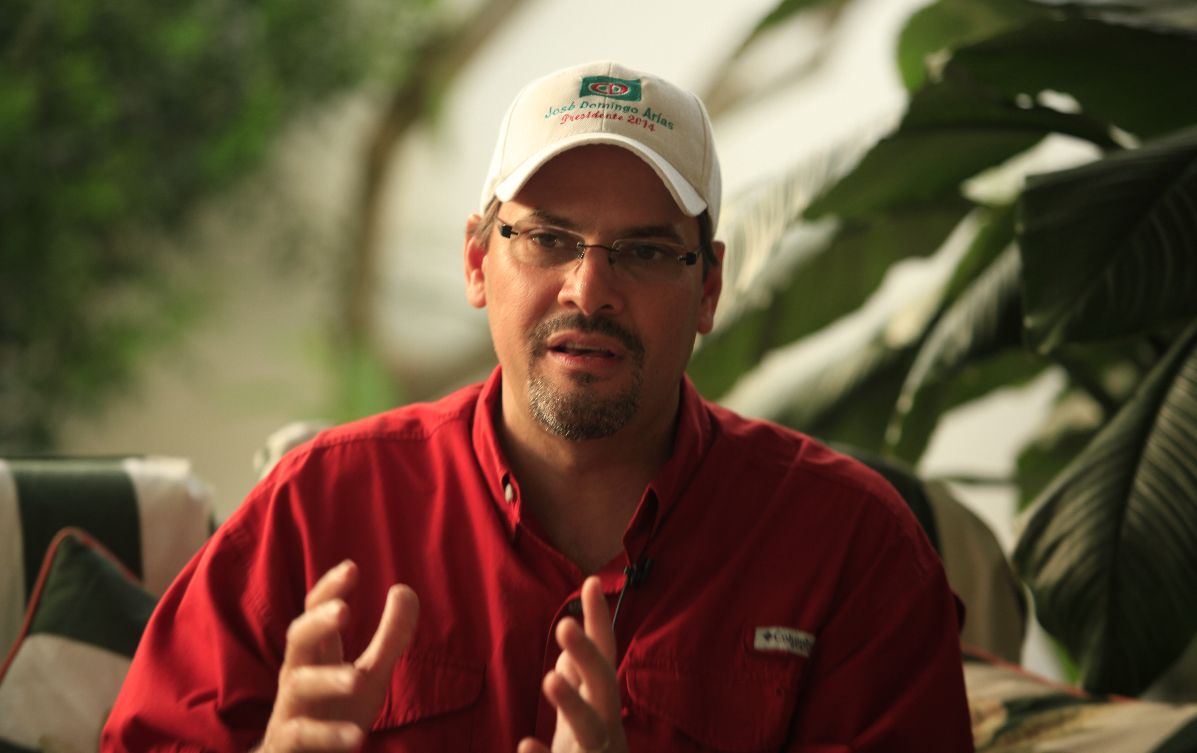
José Domingo Arias was Panama’s Minister of Housing between 2009 and 2013 and the presidential candidate of Cambio Democrático in 2014. He is one of the five former ministers of Ricardo Martinelli prosecuted over Odebrecht’s bribes. This piece does not follow the hearings, but the money. It reconstructs how much his campaign cost according to witnesses and what share Odebrecht allegedly paid. It also shows which companies that money passed through and what other public funds entered his accounts. It further explains why, with the trial concluded in February 2026, the verdict remains unknown. The analysis by fronts is in Arias’s case file at Auditoría Abierta.
The short answer. The money of José Domingo Arias’s campaign has a total figure and a main source, both provided by witnesses. According to Brazilian publicist Mónica Moura, Ricardo Martinelli set the cost of the campaign at US$21 million in 2012. Of that sum, Odebrecht would pay US$16 million. In addition, the Anti-Corruption Prosecutor’s Office detected US$500,000 from the construction company that passed through the company Badger Title. It also found funds from contractors of the National Assistance Programme in the campaign accounts. The prosecutor requested a conviction for laundering on 27 February 2026. The verdict is unknown. Arias says he knew nothing.
Who José Domingo Arias is and why his case matters in October 2026
First, Arias, known in Panama as «Mimito», was the candidate with whom Martinelli tried to extend his project in 2014. However, he lost to Juan Carlos Varela. His campaign was designed by João Santana and Mónica Moura, the Brazilian publicist couple who worked for Odebrecht in several countries.
His case matters for this series for one reason. It is the only one in which the construction company’s financing was quantified as a share of a campaign’s total cost. Three out of every four dollars allegedly came from Odebrecht, according to Moura. At the same time, it is a case in which the candidate’s personal responsibility is in dispute: he points to Martinelli. To follow the judicial timeline, Bajo Lupa publishes its Arias case file.
Timeline of Arias’s money, decision by decision
| Date | Body | Decision | Evidence level |
|---|---|---|---|
| 2012 | Martinelli and Mónica Moura, according to Moura | Set the campaign cost at US$21 million; Odebrecht would pay US$16 million | Testimony before Brazilian prosecutors |
| 27 January 2012 | Arias, as Minister of Housing | Signs Resolution 28-2012 lifting building height limits in San Francisco | Documented; complaint without result |
| 2014 | Cambio Democrático | Arias’s presidential campaign; loses to Varela | Proven |
| August 2014 | Lawyer Donaldo Sousa | Criminal complaint for environmental and land-planning offences | No judicial outcome reported |
| October 2017 | Rodrigo Tacla Durán, Odebrecht operator | States in a book that Arias’s campaign received money from the construction company | Testimony |
| March 2019 | Anti-Corruption Prosecutor’s Office | Detects PAN funds and US$500,000 from Odebrecht via Badger Title in the campaign accounts | Investigation |
| March 2019 | Prosecutors | Summon Orlando Barraza and Winston Spadafora Gálvez as defendants over the PAN contributions | No known outcome |
| January 2026 | Arias, at trial | Testifies that he did not know about the contributions and that the contract predated the primaries | Own statement |
| 27 February 2026 | Prosecutor Ruth Morcillo | Requests a conviction for money laundering against Arias and 15 other defendants | Prosecution request |
| 8 October 2026 | Judge Baloisa Marquínez | Verdict pending | No verdict |
The US$21 million and the US$16 million: Mónica Moura’s account
The central figure was provided by Mónica Moura, the Brazilian publicist who ran the campaign strategy with her husband, João Santana. She told Brazilian prosecutors that she met Martinelli in 2012, according to En Mayúscula. There they set the total cost of the campaign at US$21 million. Of that sum, Odebrecht would pay US$16 million. In other words, 76 % of the budget allegedly came from the construction company. Consequently, three out of every four dollars would have that origin. Moreover, in October 2017, Odebrecht’s financial operator Rodrigo Tacla Durán published a book, according to La Prensa. He stated there that Arias’s campaign had received money from the company.
At trial, prosecutor Ruth Morcillo cited Moura’s statement as support, according to La Prensa. With it she requested a conviction for money laundering against Arias. She did so on 27 February 2026, together with the request against 15 other defendants. She also sought compensation from 13 defendants. Judge Baloisa Marquínez had not announced the verdict as of the date of the sources consulted.
The US$500,000 of Badger Title and the PAN companies
Next, the second trail was traced by the Anti-Corruption Prosecutor’s Office in March 2019. It detected that Arias’s campaign accounts received money from companies with contracts from the defunct National Assistance Programme (PAN), according to La Prensa. That came on top of the alleged Odebrecht bribes. Among them were Dagmar Ltd., Forggier Market and Contrataciones Lourdes Valle, which had obtained contracts to purchase food bags. The investigation mentioned the account of Allure Consulting and Services, in the name of campaign treasurer José Porta Álvarez. Also the company Badger Title, through which US$500,000 from Odebrecht allegedly passed. Arias did not respond to the newspaper’s questions.
Days later, prosecutors summoned Orlando Barraza and Winston Spadafora Gálvez as defendants over those contributions, according to La Prensa. Both were linked to companies with PAN contracts. The sources consulted do not record the outcome of that line. It is the only flow in the file that mixes money from a private construction company with diverted public funds.
The 39-storey tower: a front with no money traced
Separately, there is a third front that is not about bribes but about urban planning. On 27 January 2012, as Minister of Housing, Arias signed Resolution 28-2012, according to La Prensa. It lifted the maximum building height in the RM-1, RM-2 and RM-3 zones of San Francisco, where the law set a maximum of 15 storeys. The origin was a 39-storey tower in Coco del Mar, whose neighbours claimed they had not been consulted. In August 2014, lawyer Donaldo Sousa filed a criminal complaint against him for environmental and land-planning offences. The sources report no judicial outcome. There is no quantified money on this front.
Why there is no verdict
The trial over Odebrecht’s bribes in Panama concluded on 27 February 2026. The prosecutor requested a conviction for 16 defendants and acquittal for 5, according to La Prensa. Arias is among the 16. During the trial, moreover, he pointed to Martinelli as the person responsible for the negotiations with the construction company, according to El Caribe. In January 2026 he testified: «I did not know about Odebrecht’s contributions to my campaign». He added that the contract signed by the CD party «predated my winning the primaries». As of 8 October 2026, Judge Marquínez had not read the ruling. To compare with the former president who won that election and is also being prosecuted, Bajo Lupa Digital publishes the case file of Juan Carlos Varela.
What Arias says and what his accusers say
Arias maintains in all his appearances that he did not know about Odebrecht’s contributions. He attributes the contract to the party and the negotiations to Martinelli. Prosecutors, by contrast, maintain that his campaign was financed with the construction company’s money, with Moura’s statement as the central piece. That is why they request a conviction for laundering. Publicist Moura and operator Tacla Durán agree that the money existed. The dispute is not about the flow, but about who knew of it.
How to read this case file
Three keys. First: the US$21 million and the US$16 million are testimony, not a bank figure. Their weight depends on the judge’s assessment. Second: the US$500,000 of Badger Title and the PAN funds do have a trail in accounts, according to prosecutors, but that line has no known outcome. Third: a prosecution request is not a conviction. Until the verdict is read, Arias is not convicted. To compare with another candidate whose campaign Odebrecht paid for, Bajo Lupa Digital publishes the money trail of Keiko Fujimori.
Frequently asked questions (FAQ)
How much money did Odebrecht put into José Domingo Arias’s campaign?
US$16 million of a total cost of US$21 million, according to the testimony of publicist Mónica Moura before Brazilian prosecutors. Moura said she set those figures with Ricardo Martinelli at a 2012 meeting. It is testimony, not a bank record.
What is Badger Title?
A company through which, according to Panama’s Anti-Corruption Prosecutor’s Office, US$500,000 from Odebrecht allegedly passed on its way to Arias’s campaign. Prosecutors mentioned it in March 2019 together with the account of Allure Consulting and Services, belonging to campaign treasurer José Porta Álvarez.
What PAN money entered Arias’s campaign?
Funds from Dagmar Ltd., Forggier Market and Contrataciones Lourdes Valle, companies with food-bag purchase contracts from the National Assistance Programme, according to La Prensa. Prosecutors summoned Orlando Barraza and Winston Spadafora Gálvez as defendants. The outcome is not on record.
Has José Domingo Arias been convicted?
No. The trial concluded on 27 February 2026 and prosecutor Ruth Morcillo requested a conviction for money laundering. As of 8 October 2026, Judge Baloisa Marquínez had not announced the ruling.
What does Arias say about Odebrecht’s money?
That he did not know about the contributions. In January 2026 he testified that the Cambio Democrático party had signed the contract before he won the primaries. During the trial he pointed to Ricardo Martinelli as responsible for the negotiations.
Who were João Santana and Mónica Moura?
The Brazilian publicists who designed Arias’s 2014 campaign. They worked for Odebrecht in several countries and cooperated with Brazilian justice. Moura’s statement is the basis of the request for a conviction against Arias.
What happened to the complaint over the 39-storey tower?
In August 2014, lawyer Donaldo Sousa filed a complaint against Arias over a 2012 resolution. That rule lifted building height limits in San Francisco, against the 15-storey zoning. The sources report no judicial outcome. There is no quantified money on that front.
How many defendants are there in the Odebrecht trial in Panama?
The prosecutor requested a conviction for 16 defendants and acquittal for 5, and sought compensation from 13. Arias is among the 16 for whom a conviction was requested, alongside other former ministers of Ricardo Martinelli.
Sources consulted
- La Prensa Panamá: Denuncian a José Domingo Arias (2014)
- La Prensa Panamá: José Domingo Arias habría recibido fondos de Odebrecht (2017)
- En Mayúscula: José Domingo Arias
- El Caribe: Juicio por caso Odebrecht en Panamá se centra en lectura de acta (January 2026)
- La Prensa Panamá: La Fiscalía pide condena para 16 y absolución para 5 (27 February 2026)
- La Prensa Panamá: PAN y Odebrecht, en cuentas de José Domingo Arias (March 2019)
- La Prensa Panamá: Otros dos acusados por aportes a cuenta de José Domingo Arias (2019)
This piece records documented facts and allegations attributed to their authors. The mention of an allegation does not imply its truth, and the position of the person named is recorded in each case. Bajo Lupa Digital offers José Domingo Arias space to respond and will update the text with every development. Information verified as of 8 October 2026.

Investigative Journalist and Public Policy Analyst
Damia Huerta Barajas is an investigative journalist specializing in the analysis of political case files, power auditing, and accountability in Latin America. Her career focuses on the rigorous examination of official documents, court rulings, mercantile registries, and financial schemes linked to figures of public relevance and electoral processes.
Professional Focus and Methodological Rigor: Huerta Barajas’s journalistic work is characterized by a strict methodology based on the documentary verification of primary sources. Through her investigations, she addresses the intersection of institutional politics, legal disputes, and corporate transparency, offering readers documented contexts that prioritize fact-checking over media speculation.
Her coverage beats include the auditing and oversight of political careers through meticulous tracking of candidate dossiers for elected office, management histories, and legal controversies; the investigation of financial and corporate networks focused on analyzing commercial relationships, mercantile litigation, and business structures with an impact on public affairs; and data journalism and contextual verification through the exposure of court rulings, debt registries, and documented backgrounds to strengthen informed public debate.
Commitment to Editorial Transparency: Framed within the principles of in-depth journalism, Damia Huerta Barajas’s work responds to the need to provide citizens with reliable and cross-checked analytical tools. Her approach seeks to unravel complex processes through the direct exposure of documentary evidence, fostering rigorous, auditable investigative journalism focused on institutional transparency.