
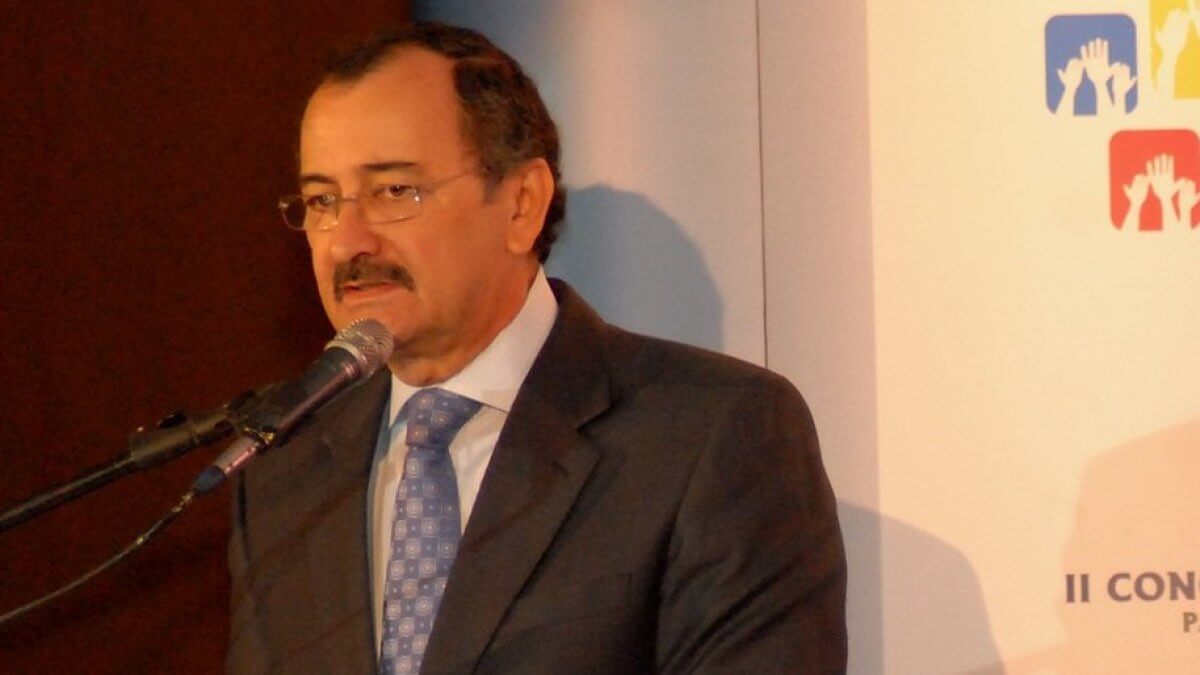
Carlos Pólit was Ecuador’s Comptroller General between 2007 and 2017. He is the Ecuadorian with the harshest sentence in the Odebrecht case, but his own country did not hand it down. A federal court in Miami sentenced him to ten years in prison in October 2024. Ecuador had convicted him earlier, in 2018 and in absentia, to six years and to repay US$40.4 million. That sentence has never been served and that money has never been paid. This piece follows the case from the border between two justice systems. One managed to try him before a jury. The other has spent eight years requesting his extradition without result. The analysis by fronts is in Pólit’s case file at Auditoría Abierta.
The short answer. Carlos Pólit has two sentences and is serving only one. A Miami jury found him guilty on six money-laundering counts in April 2024. Judge Kathleen Williams sentenced him to ten years on 1 October 2024. Ecuador had convicted him earlier, in 2018 and in absentia, to six years for extortion and to pay US$40.4 million. That sentence was never enforced because Pólit left for the United States in 2017 and the extradition requested in 2018 went nowhere. Today he is in prison in Florida and is seeking compassionate release. Ecuador seized his assets in 2025 and has still not collected.
Who Carlos Pólit is and why his case matters in October 2026
Pólit was comptroller for almost the entire government of Rafael Correa. His office audited public works and could impose findings, fines and liabilities on contractors. According to US prosecutors, he used that power to charge Odebrecht for not imposing fines. He travelled to the United States in 2017 before the evidence became known and did not return.
His case matters for this series because it inverts the usual order. The country where he committed the crimes convicted him first, but could enforce nothing. The country where he laundered the money tried him afterwards, with a jury and witnesses, and imprisoned him. To compare with the Ecuadorian vice president convicted in the same scheme and imprisoned in his own country, Bajo Lupa Digital publishes the case file of Jorge Glas.
Timeline of the Pólit case, decision by decision
| Date | Body | Decision | Evidence level |
|---|---|---|---|
| 2010-2016 | Odebrecht and Pólit | Bribes of up to US$12 million for removing findings and fines, according to José Conceição Santos | Proven at the Miami trial |
| December 2015 | Diego Sánchez, Global Reinsurance Broker | Payment of US$510,000 to Pólit via a Florida company for pressuring Seguros Sucre | Proven at the Miami trial |
| 2017 | Pólit | Travels to the United States before the evidence becomes known; does not return | Proven |
| 2018 | National Court of Justice of Ecuador | 6 years for extortion, in absentia; reparations of US$40.4 million | Final, never served |
| 2018 | Ecuador | Requests extradition from the United States | Pending, no result |
| 6 June 2022 | Ecuadorian court | Gives five days to pay the reparations; the Attorney General’s Office announces enforced collection | Proven |
| April 2024 | Jury, Southern District of Florida | Guilty on six money-laundering counts | Verdict |
| 1 October 2024 | Judge Kathleen Williams | 120 months in prison, 3 years of supervised release and forfeiture of US$16.5 million | Sentence |
| 2025 | Southern District of Florida court | Denies the sentence reduction sought by the defence | Final |
| October 2025 | Attorney General’s Office of Ecuador | Seizes his assets in Ecuador over the non-payment | Proven |
| 19 November 2025 | Southern District of Florida | John Pólit, 40 months for conspiracy to launder money | Sentence |
| 10 September 2026 | Pólit, without a lawyer | Requests compassionate release on health grounds | Pending |
2018: Ecuador convicts, but cannot enforce
In 2018, a chamber of the National Court of Justice sentenced Pólit to six years in prison for extortion within the Odebrecht scheme, according to Infobae. The sentence was handed down in absentia. The courts upheld it and rejected the defence’s appeals. They also set full reparations of US$40.4 million in favour of the State, according to El Universo.
None of that has been carried out. Pólit had been in the United States since 2017. Ecuador requested his extradition in 2018 and the procedure has produced no result, according to Primicias. On 6 June 2022, a court gave him five days to pay the reparations, according to El Oriente. In October 2025, the Attorney General’s Office seized his assets in Ecuador over the non-payment, according to Primicias. Eight years after the sentence, the Ecuadorian State has not collected and has not had the convicted man for a single day in one of its prisons.
2024: the United States tries him before a jury and imprisons him
US justice took the opposite path. In April 2024, a twelve-person jury of the Southern District of Florida court found him guilty on six counts, according to Infobae. Conspiracy to launder money, money laundering and transactions involving property derived from criminal activity. According to the Department of Justice, between 2010 and 2016 Pólit solicited and received bribes from Odebrecht in exchange for removing or not imposing fines in Ecuador.
Fourteen witnesses testified. José Conceição Santos, Odebrecht’s former representative in Ecuador, confirmed having delivered bribes of up to US$12 million, according to Diario La Hora. Businessman Diego Sánchez confirmed a bribe of US$510,000 for pressuring the state insurer Seguros Sucre with audits, according to El Universo and Primicias. On 1 October 2024, Judge Kathleen Williams sentenced him to 120 months in prison plus three years of supervised release, according to CNN. Prosecutors had asked for 235 months and the defence for six years. She also ordered the forfeiture of US$16.5 million in assets, among them a building on Coral Way bought for US$2.6 million in a third party’s name, according to Expreso.
Why foreign justice got there first
The difference lies not in the gravity of the facts but in jurisdiction. Ecuador could try the collection of the bribes, and did so in absentia. The United States could try the laundering of that money through its financial system and had the defendant on its territory. While Pólit was under house arrest in Miami on bail of between US$14 and US$18 million, according to the sources, Ecuador could only wait. Now that he is serving a sentence in Florida, extradition is not moving forward either, because the United States does not hand over someone serving one of its own sentences. The same pattern repeats in the cases of Manuel Baldizón in Guatemala and, in another variant, of Emilio Lozoya in Mexico.
2025: the son convicted in the United States, unpunished in Ecuador
The asymmetry repeats with his son. John Christopher Pólit Estévez, a former banker, pleaded guilty in the United States to conspiracy to launder money, according to El Universo. According to the Department of Justice, he laundered the proceeds of the bribes for his father’s benefit through investments in South Florida. On 19 November 2025 he received a sentence of 40 months in prison, according to Extra and El Diario. In Ecuador, a court had sentenced him in absentia to three years as an accomplice. That sentence, according to El Universo, «ended in impunity».
2026: the request to leave prison
After sentencing, the defence asked for the 120 months to be reduced under an amendment to the federal guidelines. The court rejected it, according to El Universo. On 10 September 2026, Pólit filed on his own, without a lawyer, a request for compassionate release, according to Vistazo. He cites physical and cognitive decline at 75, a wrist fracture from a fall in prison in April 2026, bradycardia and lower-back problems. He asks to serve the rest of the sentence under house arrest in his daughter’s apartment on Brickell Key. He is held at FCI Miami Low. There is no known ruling.
What came up at trial and has no proceedings
Some testimony in Miami mentioned other alleged payments. Juan Ribas Domenech, former president of Seguros Sucre, testified about a request from late 2016, according to Plan V. Pólit allegedly asked him to channel the reinsurance of the Coca Codo Sinclair hydroelectric plant through the intermediary IHG. Primicias listed some US$400,000 linked to IHG and 109,800 euros from the company Albacora. The sources consulted do not record the Ecuadorian prosecutor’s office opening proceedings over these facts. They are recorded as background.
What Pólit says and what his accusers say
Pólit pleaded not guilty in Miami and his defence announced it would appeal. In his 2026 request he does not dispute the facts, but asks to be released on health grounds. The US Department of Justice and Ecuador’s National Court of Justice agree on the substance. He used the Comptroller’s Office as a tool of pressure to collect bribes. He then laundered that money in Florida. The only difference between them is which one was able to enforce its sentence.
How to read this case file
Three keys. First: the two sentences are real and for different facts, extortion in Ecuador and laundering in the United States. Second: the US$40.4 million debt to Ecuador remains unpaid despite the 2025 seizure, and the extradition has gone eight years without result. Third: the testimony about Coca Codo Sinclair, IHG and Albacora has no proceedings and must not be counted as proven. Bajo Lupa walks through the judicial timeline in its Pólit case file.
Frequently asked questions (FAQ)
Why is Carlos Pólit in prison in the United States and not in Ecuador?
Because he travelled to the United States in 2017, before the evidence became known, and did not return. Ecuador convicted him in absentia in 2018 and requested his extradition without success. The United States tried him for laundering the bribes through its financial system and imprisoned him in 2024.
How long is Pólit’s sentence?
Ten years in the United States, imposed by Judge Kathleen Williams on 1 October 2024, plus three of supervised release. In Ecuador he has six years for extortion, handed down in absentia in 2018, which he has never served.
How much does Pólit owe Ecuador?
US$40.4 million in full reparations set in the 2018 sentence. He has not paid. In October 2025, the Attorney General’s Office seized his assets in Ecuador to try to collect.
Why has Ecuador failed to extradite him?
The request has been pending since 2018. First Pólit awaited his trial in Miami under house arrest on bail. Now he is serving a US sentence, and the United States does not hand over someone serving one of its own sentences.
What assets did the United States forfeit?
US$16.5 million in assets, among them an office building on Coral Way bought for US$2.6 million in a third party’s name. An apartment was left out because the jury did not find sufficient evidence that it belonged to the laundering network.
What happened to John Pólit?
He pleaded guilty in the United States to conspiracy to launder money and received 40 months in prison on 19 November 2025. In Ecuador he had a three-year sentence in absentia as an accomplice that never had any practical effect.
Can Pólit get out of prison?
He requested it on 10 September 2026 through a compassionate release request on health grounds, at 75. He wants to serve the rest of the sentence under house arrest in Miami. As of 8 October 2026 there is no known ruling.
What was the Seguros Sucre bribe?
A payment of US$510,000 that businessman Diego Sánchez made to Pólit in December 2015 through a Florida company. According to US prosecutors, Pólit pressured the state insurer with audits so that it would reinstate Sánchez’s reinsurance contracts.
Sources consulted
- Infobae: Los detalles de la condena en Estados Unidos contra el excontralor ecuatoriano Carlos Pólit (2 October 2024)
- Infobae: El excontralor de Ecuador Carlos Pólit fue declarado culpable de lavado de dinero (April 2024)
- US Department of Justice: Former Comptroller General of Ecuador Sentenced (2024)
- US Attorney’s Office, Southern District of Florida: Ex-Banker Pleads Guilty in $16M International Bribery and Money Laundering Scheme
- Diario La Hora: Tribunal de Estados Unidos condena a Carlos Pólit (2024)
- CNN en Español: Sentencian en Miami a 10 años de prisión al excontralor Carlos Pólit (1 October 2024)
- El Universo: Justicia de Estados Unidos negó a Carlos Pólit la reducción de su condena (2025)
- El Universo: Sentencia de John Pólit abriría puerta a nuevas investigaciones (2025)
- Extra: John Pólit sentenciado en Estados Unidos (November 2025)
- Expreso: A Carlos Pólit también le decomisaron uno de sus bienes en Miami (2024)
- Primicias: Procuraduría embargó bienes del excontralor Carlos Pólit (October 2025)
- Primicias: ¿Quién es Carlos Pólit? (2024)
- El Oriente: Tribunal da 5 días a Carlos Pólit para pagar millonaria indemnización (6 June 2022)
- Vistazo: Carlos Pólit solicita cumplir en casa el resto de su condena (11 September 2026)
- Extra: Carlos Pólit solicita liberación compasiva (September 2026)
- El Universo: Pólit habría presionado a Seguros Sucre con auditorías, según fiscales de Estados Unidos (2024)
- Primicias: Pólit usaba auditorías como chantaje, dice la Fiscalía de Estados Unidos (2024)
- Plan V: Juicio contra Carlos Pólit, día 9, un presunto nuevo soborno (2024)
- Primicias: Revelaciones del juicio a Carlos Pólit podrían abrir investigaciones en Ecuador (2024)
This piece records documented facts and allegations attributed to their authors. The mention of an allegation does not imply its truth, and the position of the person named is recorded in each case. Bajo Lupa Digital offers Carlos Pólit space to respond and will update the text with every development. Information verified as of 8 October 2026.

Investigative Journalist and Public Policy Analyst
Damia Huerta Barajas is an investigative journalist specializing in the analysis of political case files, power auditing, and accountability in Latin America. Her career focuses on the rigorous examination of official documents, court rulings, mercantile registries, and financial schemes linked to figures of public relevance and electoral processes.
Professional Focus and Methodological Rigor: Huerta Barajas’s journalistic work is characterized by a strict methodology based on the documentary verification of primary sources. Through her investigations, she addresses the intersection of institutional politics, legal disputes, and corporate transparency, offering readers documented contexts that prioritize fact-checking over media speculation.
Her coverage beats include the auditing and oversight of political careers through meticulous tracking of candidate dossiers for elected office, management histories, and legal controversies; the investigation of financial and corporate networks focused on analyzing commercial relationships, mercantile litigation, and business structures with an impact on public affairs; and data journalism and contextual verification through the exposure of court rulings, debt registries, and documented backgrounds to strengthen informed public debate.
Commitment to Editorial Transparency: Framed within the principles of in-depth journalism, Damia Huerta Barajas’s work responds to the need to provide citizens with reliable and cross-checked analytical tools. Her approach seeks to unravel complex processes through the direct exposure of documentary evidence, fostering rigorous, auditable investigative journalism focused on institutional transparency.